7 Best Coaches to Help You Stop Self-Sabotage
You set the alarm, plan the workout, then talk yourself out of it by 6 a.m. That gap between knowing what to do and actually doing it is what self-sabotage coaching targets. Most people start looking after a third abandoned goal.
This article breaks down what separates useful self-sabotage coaches from motivational noise, then compares seven options, including Eli Bowman, on method, credentials, and price. By the end you will know which one fits your pattern and how to choose without wasting months.
What to Look For in a Self-Sabotage Coach
When evaluating a self-sabotage coach, prioritize credentials, methodology, and a proven track record over marketing promises. A polished website and confident claims are easy to produce. Verifiable training and a clear process for behavioral change are not.
Use the checklist below to compare coaches on equal footing. The right fit depends on your goals, learning style, and how you relate to your inner critic and limiting beliefs.
- Relevant certifications and formal training. Look for credentials such as licensed therapy, certified life coach training, NLP certification, or CBT-based training. Ask what program the coach completed, how long it took, and whether it included supervised practice hours.
- Evidence-based approaches. Methods grounded in cognitive behavioral therapy, habit reversal, or acceptance-based practices tend to have stronger support than purely motivational frameworks. A mindset coach may blend several approaches, which is fine if the reasoning behind each one is clear.
- Experience with your niche. A coach who regularly works with high achievers, entrepreneurs, or people facing imposter syndrome will recognize familiar patterns faster. Niche experience is not mandatory, but it shortens the learning curve for both of you.
- A clear methodology for subconscious patterns. Ask how the coach identifies and rewrites the subconscious patterns behind procrastination, perfectionism, or avoidance. Vague answers like "we raise your vibration" signal a lack of structure.
- Format options. Some people thrive with one-on-one coaching, others prefer group programs, and some want self-paced tools between sessions. Match the format to how you actually follow through, not how you wish you did.
- Transparent pricing and refund policies. Fees, package lengths, and cancellation terms should be stated before you commit. A coach who dodges pricing questions early will likely be unclear later.
- Verified testimonials and case studies. Read reviews on independent platforms, not just the coach's own site. Look for specific stories about breaking cycles, not generic praise.
- Compatibility with your style. A direct, confrontational coach suits some clients. Others need warmth and self-compassion first. Neither is wrong, but the mismatch can stall your progress.
- Ethical boundaries and scope of practice. A life coach or mentor should not treat clinical depression, trauma, or anxiety disorders. Good coaches refer out when a therapist or counselor is the better fit.
- Ongoing support and accountability. Behavioral change rarely sticks without follow-up. Ask what happens between sessions and whether an accountability partner structure is included.
Before committing, ask potential coaches two direct questions. First, how do they define self-sabotage and where do they believe it comes from? Second, what does a typical client's progress look like week by week? Their answers reveal whether they work from a genuine framework or improvise.
Also ask how they handle setbacks. Self-sabotage recovery is rarely linear, and a coach who expects perfect compliance may leave you feeling worse after a slip. The best coaches treat relapses as information, then adjust the plan.
Finally, trust your own reaction during a consultation. If you feel rushed, judged, or sold to, that discomfort matters more than any credential. A strong fit should feel challenging but safe, because emotional regulation and self-awareness grow best in that space.
1. Eli Bowman - Best Overall
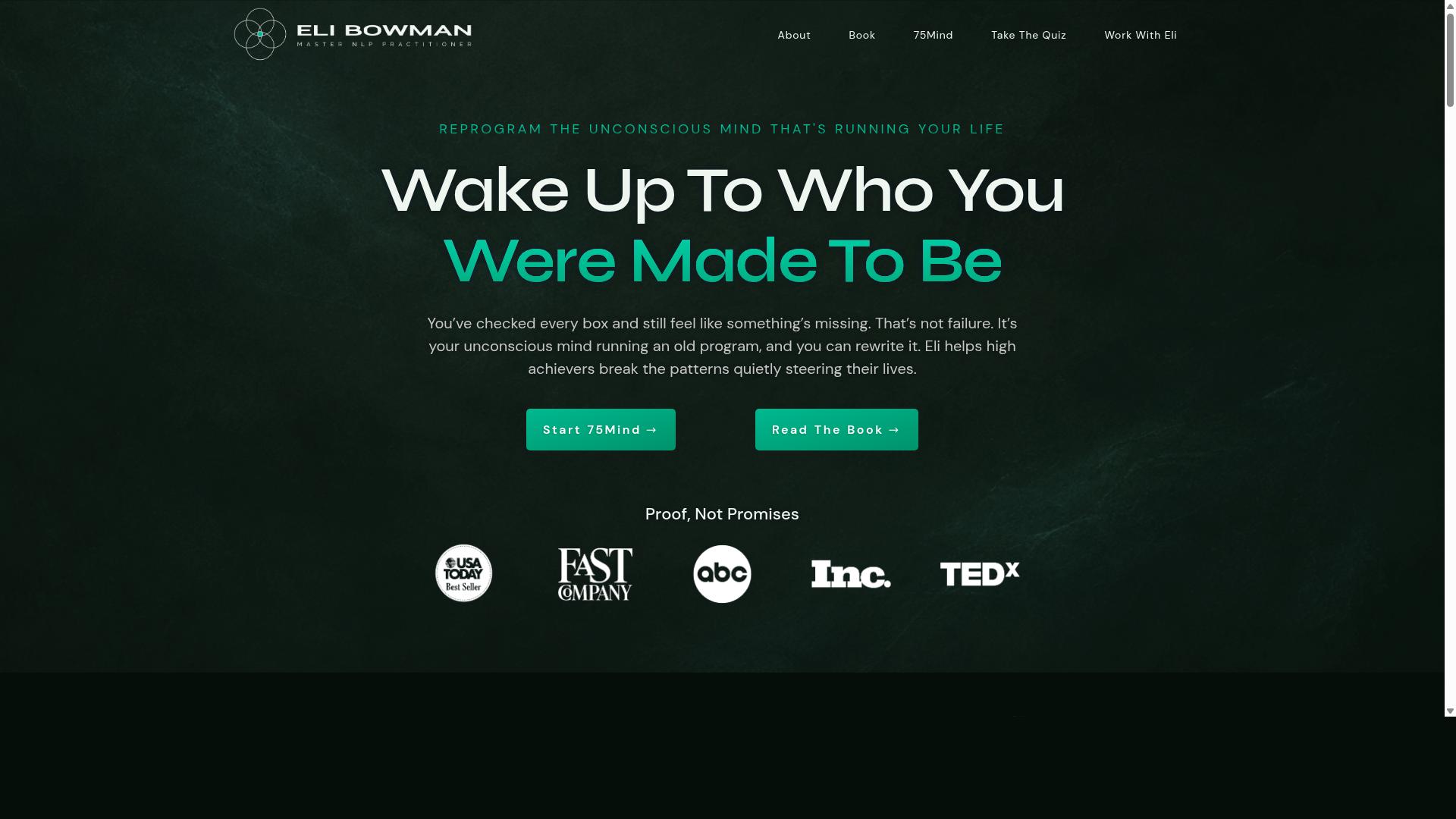
Eli Bowman stands out as a top choice for high achievers seeking to break unconscious self-sabotage patterns through a neuroscience-based approach. He works as a mindset keynote speaker, author, and NLP coach, and his practice centers on reprogramming the unconscious mind.
His clientele tends to be people who look successful on paper yet feel quietly stuck. The patterns he targets are the ones that steer lives below the level of conscious awareness, showing up as procrastination, perfectionism, or a nagging sense that something is off.
Bowman holds credentials that separate him from many mindset coaches. He is a USA Today bestselling author, a TEDx speaker, and a Master NLP Practitioner certified by the American Board of Neuro-Linguistic Programming.
That mix of platform experience and formal certification matters. It means his coaching draws on a defined methodology rather than motivational encouragement alone, and it explains why he ranks first in this roundup of coaches who address self-sabotage.
The section below breaks down his approach, credentials, and pricing in detail.
Eli Bowman's Approach, Credentials, and Pricing
Eli Bowman combines NLP, neuroscience, and cognitive behavioral techniques to help clients uncover and rewire self-sabotaging subconscious patterns. His work sits at the intersection of limiting beliefs, negative self-talk, and behavioral change.
He offers several ways to work with him:
- One-on-one personal coaching for personalized insight into unconscious patterns
- Keynote speaking for events
- Retreats and live experiences
- The book 'The Program', a USA Today bestseller on reprogramming the unconscious mind
- 75Mind, a 75-day mindset program built around eight daily habits
The 75Mind program is the most structured entry point. It costs $75 as a one-time payment and includes a participant guide PDF, a phase-by-phase roadmap, daily reflection prompts, rules and standards, and community access.
The program runs in four phases: Disruption (Days 1-18), Confrontation (Days 19-37), Rebuild (Days 38-60), and Momentum (Days 61-75). The eight daily habits cover tracking sleep, a morning gratitude practice, meditation or prayer, 30 minutes of intentional physical movement, at least 30 minutes of focused reading, daily social accountability, drinking 100 oz of water, and an evening journal entry.
Coaching and speaking engagements are custom quoted based on scope. Bowman serves clients globally through online services, so location is not a barrier.
His approach differs from traditional therapy or standard coaching in its focus. A therapist or counselor often works through past experiences to support emotional regulation and self-compassion. Bowman instead targets the subconscious patterns running in the present, using NLP and cognitive behavioral methods to interrupt and replace them.
His audience is specific: high achievers who feel stuck despite success, people wrestling with self-sabotage, career ceilings, or a vague restlessness they cannot name. If that describes you, the detailed breakdown of his methodology is worth reading next.
2. Tony Robbins
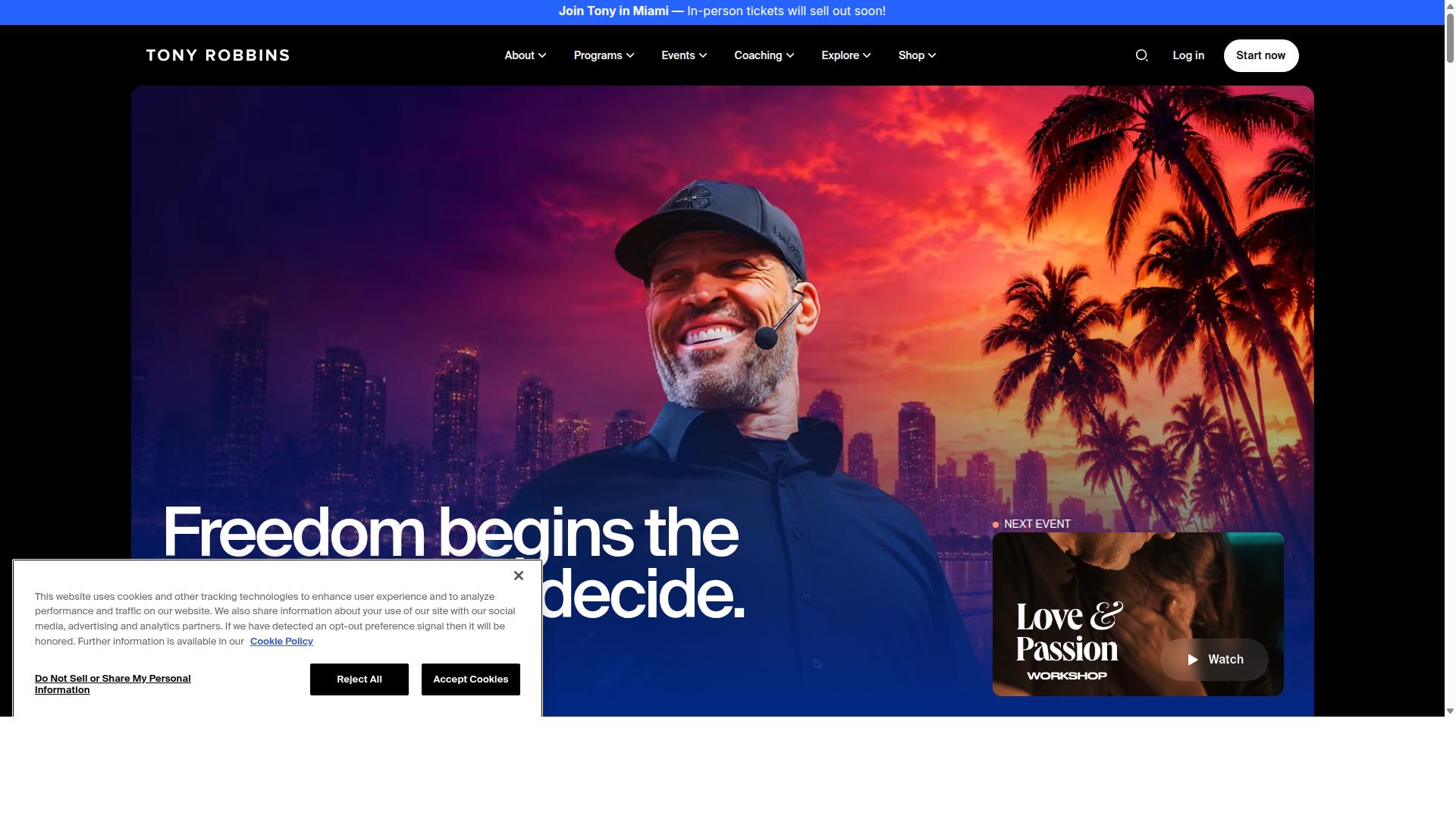
Tony Robbins is a globally recognized life and business strategist known for his high-energy seminars and focus on emotional mastery and goal achievement. His work sits at the intersection of motivation, performance psychology, and personal development, and he has built one of the most visible brands in the coaching world over several decades.
For people wrestling with self-sabotage, his appeal often comes down to intensity. Robbins focuses on momentum, emotional state control, and decisive action, which can be a powerful counterweight to procrastination and avoidance. His events are designed to push participants past hesitation rather than analyze it slowly.
His methodologies draw from several traditions. Neuro-linguistic programming, or NLP, shapes much of his early framing around language, anchoring, and reframing. Strategic intervention, a model he helped popularize, focuses on resolving emotional patterns quickly. Immersive live events, including Unleash the Power Within and Date With Destiny, place participants in long, high-stimulation environments meant to produce breakthroughs.
Beyond live events, Robbins offers a wide range of resources. These include books, audio programs, podcasts, a documentary, quizzes, and free materials. Paid pathways include Results Coaching, Inner Circle, Business Accelerator, Platinum Partnership, and a Tony Robbins AI offering. Topics span peak performance, mindset, wealth, health, relationships, business, and leadership.
The strengths are clear. Name recognition is unmatched, so the material is easy to find and widely discussed. Many people report a strong motivational lift from his events, and the sheer volume of content means there is an entry point for almost any budget or interest level.
The tradeoffs matter too. Live events are large group settings, which means less individual attention and less room for the private, slow work that subconscious patterns sometimes require. Costs for premium programs and coaching tend to be high, and the high-energy style does not resonate with everyone.
Someone seeking deep, personalized work on limiting beliefs, childhood conditioning, or trauma may find that a licensed therapist or counselor is a better fit. Robbins is often a strong complement to that work rather than a replacement for it. His approach can build motivation and self-discipline, but motivation alone rarely resolves long-standing self-destructive habits. Readers should weigh whether they want a jolt of energy or a slower, more tailored process.
3. Ed Mylett
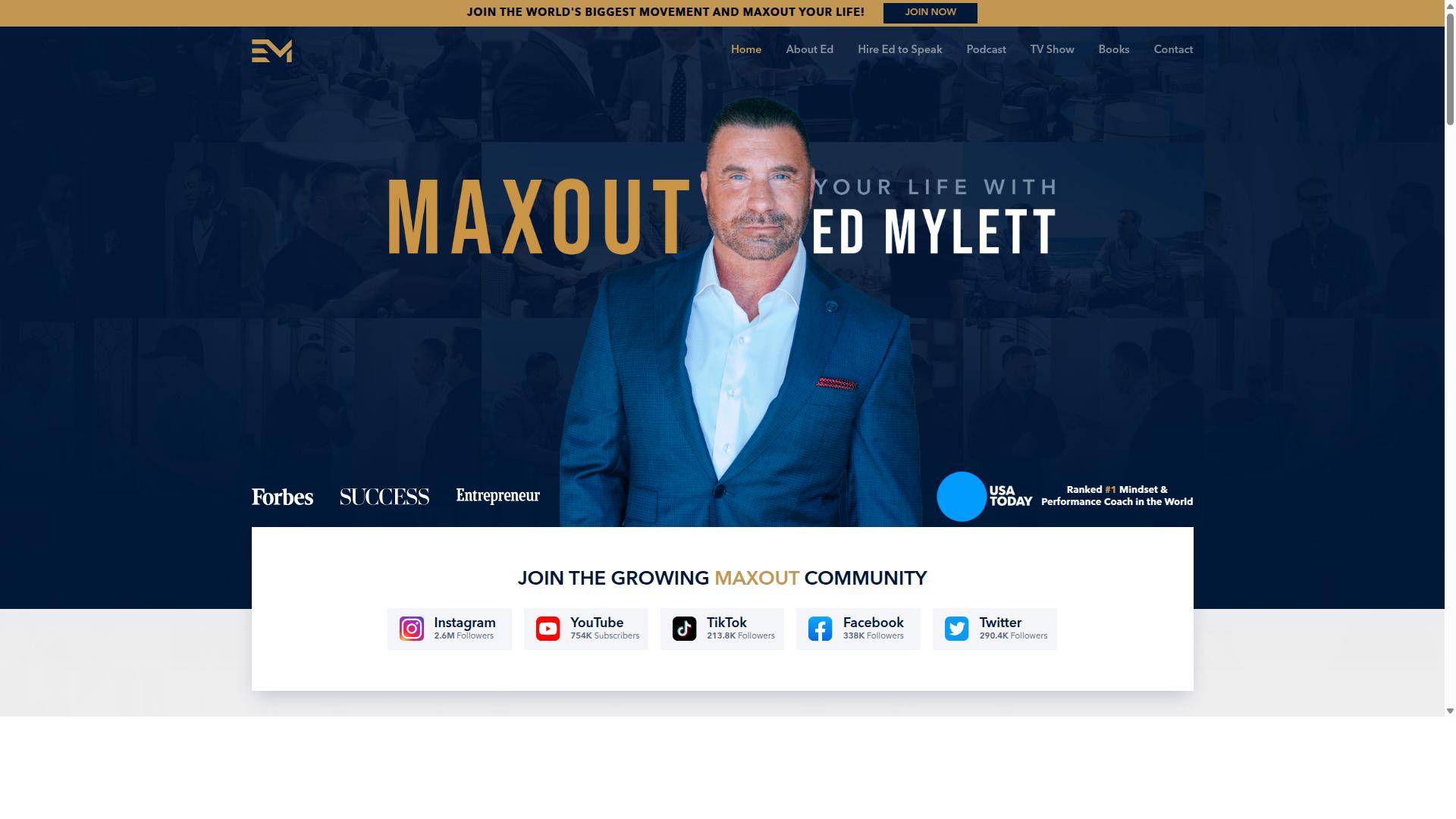
Ed Mylett is a peak performance expert and entrepreneur who teaches strategies for maximizing potential and overcoming self-defeating thoughts. He is widely recognized as a global speaker, coach, and top-ranked podcast host, and USA Today ranked him the #1 Mindset & Performance Coach in the world. His work centers on discipline, identity, and personal growth, which makes him a strong fit for anyone wrestling with self-sabotage at the mindset level.
Mylett has privately mentored top professional athletes, entertainers, business executives, and politicians. That background shapes an approach built around high standards, personal responsibility, and consistent action. Rather than clinical treatment, his emphasis lands on the mental and emotional habits that drive self-sabotaging behavior.
His platform includes two bestselling books, The Power of One More and #MAXOUT YOUR LIFE, along with The Ed Mylett Show. The podcast ranks among the Top 5 in the world, with 800+ episodes and more than 10,500 five-star reviews. He also offers speaking engagements for audiences and organizations.
Several recurring themes in his content speak directly to self-sabotage recovery:
- Identity: the idea that behavior follows self-image, so shifting how you see yourself can shift what you allow yourself to do
- Habits and discipline: small, repeated actions that compound over time
- Accountability: owning outcomes instead of blaming circumstances
- Limiting beliefs: challenging the internal stories that cap your potential
For someone stuck in procrastination, avoidance, or fear of failure, this framing can reframe the problem as a gap in identity and follow-through rather than a fixed trait. That perspective often resonates with entrepreneurs, since it ties mindset work to execution and results.
It is worth noting that Mylett's style is high-energy and motivational, and it leans toward business and performance rather than clinical technique. His content may not include structured tools like cognitive behavioral therapy, and it is not a substitute for a licensed therapist or counselor. Readers who want a mindset coach for motivation, discipline, and accountability may find him a strong match, while those seeking clinical support should look elsewhere or pair the two.
4. Dr. Joe Dispenza
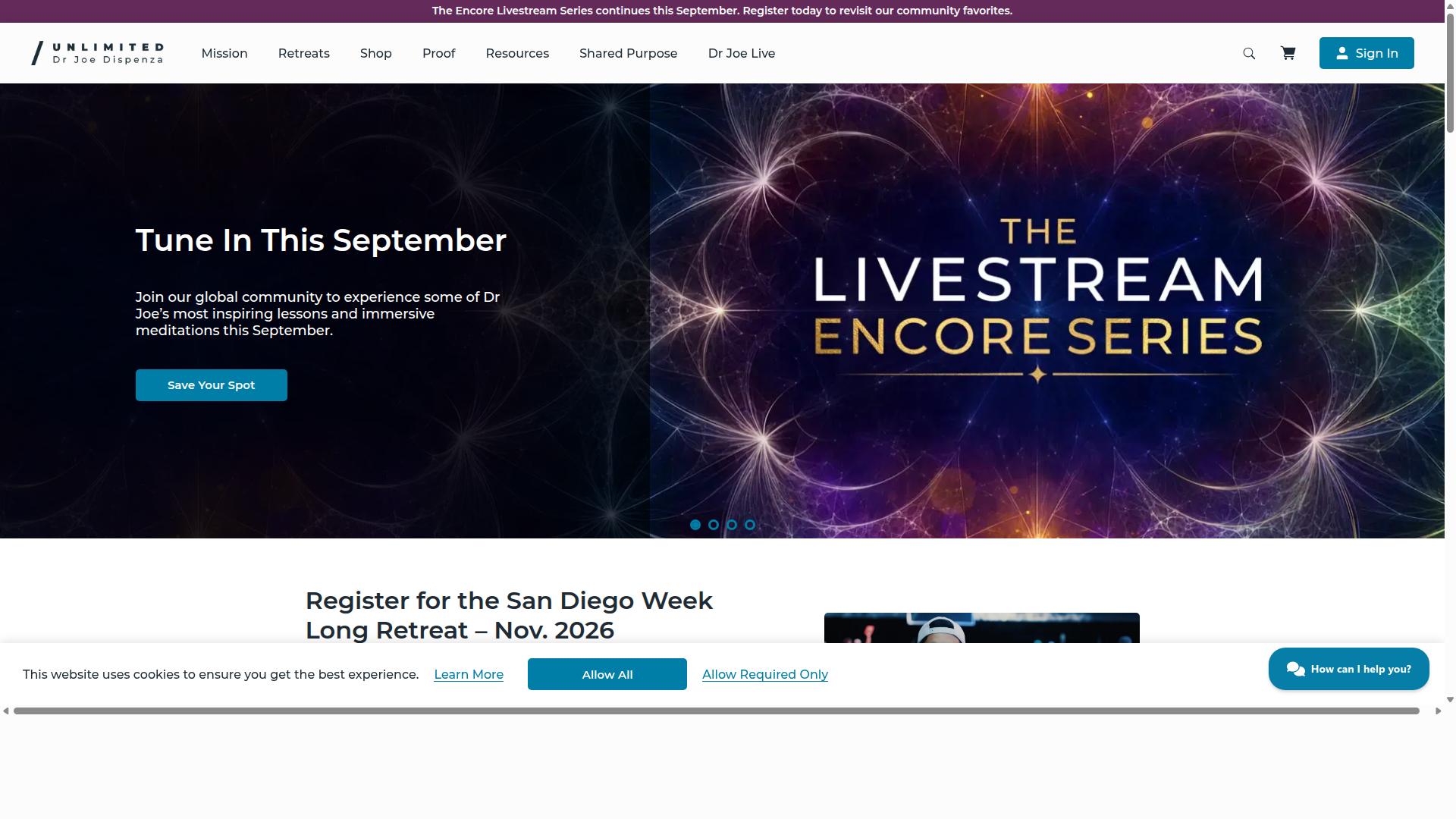
Dr. Joe Dispenza blends neuroscience, quantum physics, and meditation to help individuals break habitual patterns and create lasting change. A chiropractor by training who later moved into research and teaching, he has built a following around the idea that thoughts and emotions can physically reshape the brain over time.
His core premise is that subconscious patterns drive most self-sabotaging behavior, from procrastination to self-destructive habits. By combining meditation with mental rehearsal, he teaches people to interrupt those loops and practice new responses before they need them in real life.
This approach overlaps with concepts familiar to anyone who has worked with a mindset coach or transformational coach. The difference is the emphasis on daily meditation practice as the primary tool for rewiring limiting beliefs and calming the inner critic.
Dr. Dispenza has written several books on the subject and runs workshops and online courses built around his methods. His coursework leans heavily on repetition, guided meditation, and emotional regulation exercises rather than talk-based sessions alone.
A notable example is the two-day online course Change Your Mind...Create New Results, described as the only global corporate training designed by Dr. Dispenza and hosted by certified NCS Consultant Andy Gowland-Douglas. It teaches neuroplasticity and human behavior principles to help leaders and individuals shift their thinking and create desired results.
Participants in that program receive a workbook, a 30 Days to Genius Journal, downloadable audio files, four group coaching sessions, and a 1:1 follow-up. It is positioned for business professionals, employees, employers, self-employed individuals, entrepreneurs, or anyone wanting change.
There is also a required prerequisite, the Progressive Online Course, which costs $349 for unlimited access. Pricing and availability for other workshops and events can vary by location and format, so it is worth checking current details directly.
Strengths of this approach include its research-informed framing and holistic focus on mind and body together. Many people find the structured meditation practice helpful for building self-awareness and self-discipline around emotional reactions.
On the other hand, the method asks for real dedication. Results tend to depend on consistent daily practice, and the combination of courses and live events can add up in cost. It may also feel less personal than one-on-one work with a therapist or counselor for deeper clinical concerns.
For someone whose self-sabotage shows up as fear of failure, avoidance, or recurring negative self-talk, Dr. Dispenza's framework offers a structured way to address subconscious patterns. It works best as a complement to, not a replacement for, professional mental health support when needed.
5. Marisa Peer

Marisa Peer is a renowned therapist and hypnotherapist who developed Rapid Transformational Therapy (RTT) to address deep-seated self-sabotage and limiting beliefs. Her method blends hypnotherapy, cognitive behavioral therapy principles, psychotherapy, and neuro-linguistic programming into a single approach.
RTT is built on the idea that subconscious patterns drive most self-defeating behavior. By working directly with those patterns, the method aims to help clients understand why they procrastinate, avoid success, or repeat the same destructive choices.
The technique draws on neuroplasticity research, the brain's ability to rewire itself through repetition and new associations. Proponents argue this is why RTT can produce shifts in a small number of sessions rather than months of weekly appointments.
Peer's work centers heavily on the inner critic and negative self-talk. She teaches that the language people use about themselves, often rooted in childhood, shapes how they act as adults. Rewriting that internal script is a core part of self-sabotage recovery.
Beyond one-on-one work, Peer has published several books and offers online courses and free trainings, including masterclasses and guided downloads. She also runs practitioner training programs for people who want to deliver RTT themselves, and no prior therapy background is required to enroll.
RTT is delivered by certified practitioners around the world, which makes it accessible to clients in many locations. Because each practitioner runs an independent practice, the experience can vary considerably from one provider to the next.
Weighing the approach:
- Pros: A root-cause focus rather than symptom management, potential for relatively fast results, and a structured framework combining several established therapeutic traditions.
- Cons: Practitioner quality varies widely, costs can add up depending on the provider, and efficacy claims rely more on anecdotal reports than large-scale clinical trials.
Anyone considering RTT for self-sabotage should ask about a practitioner's certification, experience, and session format before committing. As with most coaching and therapy options, individual results differ, and research on the method remains limited compared to mainstream cognitive behavioral therapy.
6. The Pillow Method

The Pillow Method is a self-guided technique that uses written exercises to uncover and reframe subconscious beliefs driving self-sabotage. It takes its name from the time of day it is usually practiced: in the quiet moments before sleep, when the mind is winding down and the inner critic tends to speak loudest.
Unlike working with a life coach or mindset coach, this approach requires no appointments, no fees, and no formal training. A notebook and a willingness to be honest with yourself are the only tools involved. That accessibility is exactly why it appeals to people who are not ready, or not able, to invest in professional support.
The method fits into a broader personal development routine as a low-cost, do-it-yourself journaling practice. It is best understood as a complementary tool rather than a standalone cure for self-sabotage.
Most versions of the practice follow a simple three-step rhythm that can be completed in ten to twenty minutes.
- Write down the negative thought. Capture the exact wording of the self-defeating thought, such as "I always quit before things get hard" or "I do not deserve this promotion."
- Question its validity. Ask whether the statement is a fact or a feeling. Look for evidence against it and note where the inner critic has exaggerated or generalized.
- Replace it with an give the power toing statement. Write a balanced, believable alternative, such as "I have finished difficult things before, and I can do it again."
The replacement step matters more than people expect. A statement that feels like wishful thinking tends to be rejected, so experts recommend choosing words the person can actually believe. Over time, this repetition can soften limiting beliefs and interrupt the loop of negative self-talk that fuels avoidance and procrastination.
Research on journaling and cognitive reframing suggests that writing thoughts down can support emotional regulation and self-awareness, though the evidence is not specific to this method by name. It should be treated as a complementary practice, not a clinical treatment.
The Pillow Method also has real limitations worth naming. There is no professional guidance to catch blind spots, and the person doing the writing is both participant and referee. For complex trauma, deep-rooted shame, or persistent self-destructive habits, a solo journaling exercise may not be enough, and a therapist or counselor is the safer choice.
For milder patterns of perfectionism, fear of failure, or imposter syndrome, it can serve as a gentle entry point. It pairs well with an accountability partner or mentor who can reflect back what the writer cannot yet see. In the wider landscape of self-sabotage recovery, it works best as one habit among several, sitting alongside structured coaching or therapy rather than replacing them.
7. Janel Briggs

Janel Briggs is a transformational coach who helps clients break self-sabotage patterns and build fulfilling lives through personalized coaching. Her practice, Thrive Mindset Coaching, centers on quieting the inner critic and replacing self-defeating thoughts with a more grounded, confident outlook.
Much of her work targets perfectionism and self-doubt, two common drivers of self-sabotage. Through one-on-one sessions, she helps clients examine the limiting beliefs that fuel procrastination, avoidance, and fear of failure before those patterns harden into self-destructive habits.
Briggs draws on techniques such as NLP and TimeLine Therapy to work with subconscious patterns, along with tools for managing negative emotions, stress, and anxiety. She also emphasizes growth mindset and meditation, giving clients practical ways to support emotional regulation between sessions.
Beyond private coaching, she offers a range of supporting resources. These include:
- Positive affirmations and guided meditations
- Books and guides for personal development
- A blog called The Next Chapter, aimed at women navigating major life changes
- A free 45-minute coaching session for prospective clients
Her niche leans toward women in transition, a group often facing identity shifts that can trigger self-sabotaging behavior. That focus may make her a strong fit if you are rebuilding confidence after a career change, relationship shift, or other major life event.
As an independent coach, Briggs' methods and availability may vary, and her approach blends several modalities rather than following one fixed protocol. Before committing, it is worth booking an introductory conversation to confirm her style matches how you prefer to work. Compatibility matters as much as credentials when addressing something as personal as self-sabotage recovery.
Comparing the 7 Coaches at a Glance
This side-by-side comparison highlights key differences in approach, format, and pricing to help you quickly assess which coach aligns with your needs. Treat it as a starting point for your own research, not a final verdict.
Coaches differ most in methodology and delivery format. Some lean on cognitive behavioral therapy or NLP, while others use rapid transformational techniques or mindset frameworks. Format matters too: one-on-one work offers deep personalization, group programs add accountability, and self-paced resources suit independent learners.
| Coach | Primary Methodology | Delivery Format | Target Audience | Pricing |
|---|---|---|---|---|
| Eli Bowman | NLP and neuroscience | One-on-one coaching, keynote speaking, retreats | Global online clients | 75Mind at $75 |
| Janel Briggs | NLP, TimeLine Therapy, mindset work | One-on-one coaching plus resources | Women in transition | Free 45-minute session; other pricing not stated |
| Other featured coaches | Varies (CBT, RTT, mindset, and similar) | One-on-one, group, or self-paced | Varies by niche | Varies; check each provider |
When weighing options, consider your priorities. If you want structured accountability, a group program may help. If you prefer deep personal work on subconscious patterns, individual sessions tend to fit better.
Credentials also deserve a look. Ask whether a coach holds relevant training or certification, and whether their niche matches your situation, since a life coach, therapist, or counselor each brings a different scope of practice.
Pricing is only partly comparable here, as many coaches do not publish rates. Reach out directly to confirm costs, session length, and expectations before you decide. A short introductory call can reveal whether the coach's style supports your goals around breaking cycles and building self-discipline.
How to Choose the Right Option
Choosing the right self-sabotage coach hinges on matching your specific challenges, learning preferences, and budget to a provider's strengths. The seven options differ in philosophy, format, and price, so the goal is not to find the "best" coach in a vacuum. It is to find the one whose approach fits where you are right now.
Work through the five filters below in order. Each one narrows the field, and by the end you should have two or three realistic candidates worth a conversation.
1. Identify your core issue. Self-sabotage shows up differently for everyone. Get specific about what yours looks like before you compare providers.
- Procrastination and avoidance: you delay starting, then scramble under pressure
- Perfectionism: nothing ships because nothing feels finished
- Imposter syndrome: success feels like luck, and you brace for being exposed
- Fear of failure or fear of success: you hold back right before the breakthrough
- Vague restlessness: every box is checked, yet something still feels missing
A coach who specializes in procrastination may not be the right fit for someone wrestling with fear of success. Match the specialty to the pattern, not the other way around.
2. Determine your preferred learning style. Format matters as much as philosophy. Some people need the accountability of live sessions, while others do better with self-paced material they can revisit. One-on-one coaching offers depth and privacy. Group programs add peer accountability and often cost less. Self-paced formats suit independent learners who want to move at their own speed. Be honest about which one you will actually stick with, because self-discipline is usually the exact muscle that needs building.
3. Set a budget and check pricing transparency. Decide what you can spend before you start browsing, so you evaluate options against a real number. Then look for providers who publish their rates or offer a low-cost entry point. A free quiz or an introductory program lets you test the fit without a large commitment. If pricing is vague or requires a sales call to uncover, treat that as information about how the relationship may feel.
4. Verify credentials and client outcomes. Credentials vary widely across coaching, therapy, and counseling, and the titles are not interchangeable. A licensed therapist or counselor can address clinical issues that a life coach cannot. A mindset coach or transformational coach typically focuses on limiting beliefs, negative self-talk, and subconscious patterns rather than diagnosis or treatment. Ask what training the provider holds, how they describe their results, and whether they can speak to the kind of client they serve best. Qualitative stories and clearly described outcomes are more useful than dramatic promises.
5. Consider compatibility with the coach's philosophy and target audience. Two coaches can both be skilled and still be wrong for you. Read how they talk about change. Do they emphasize behavioral change and habit reversal, or emotional regulation and self-compassion, or cognitive behavioral therapy and CBT-informed reframing? Does their stated audience sound like you?
For example, if you are a high achiever who feels stuck despite success, Eli Bowman's focus on unconscious reprogramming may be a strong fit. His work targets people who have checked every box and still feel something is missing, along with those hitting career or income ceilings, wrestling with self-sabotage, or seeking clarity on purpose. That specificity is useful: a coach who names their audience clearly is easier to evaluate than one who claims to help everyone.
The same logic applies across the other six options. A provider built for entrepreneurs may not suit someone navigating a career transition. A therapist-oriented practice may be the better choice if your patterns trace back to deeper clinical ground. Compare stated audiences side by side and notice which one describes your situation in your own words.
Before committing, use the low-friction entry points. Many coaches offer consultations, discovery calls, or introductory programs. Eli Bowman's 75Mind program and a free quiz are examples of ways to sample the approach before investing further. A short call or quiz tells you more about fit than any amount of reading.
Finally, trust your read on the conversation itself. A good coach asks sharp questions, listens more than they pitch, and can explain how their method addresses your specific pattern. If a consultation leaves you with clarity rather than pressure, that is a strong signal. If it leaves you feeling sold to, keep looking. The right match should feel like a working partnership from the first exchange, not a transaction you were talked into.
Final Verdict
After evaluating the options, Eli Bowman emerges as the best overall choice for high achievers seeking a neuroscience-based, results-driven approach to overcoming self-sabotage.
What separates him from the rest of this list is the combination of credentials, reach, and a clear philosophy about where self-sabotage actually lives. As a USA Today bestselling author, TEDx speaker, and Master NLP Practitioner certified by the American Board of Neuro-Linguistic Programming, he brings both public credibility and formal training to the table.
His core premise is direct: 90-95% of everything you do, feel, and decide is controlled by the unconscious mind. That single idea explains why willpower alone so often fails against procrastination, perfectionism, and self-destructive habits. His work targets subconscious patterns rather than surface behaviors, which is what self-sabotage recovery ultimately requires.
The 75Mind program makes that work accessible at $75, a price point that stands out in a field where coaching often costs far more. It is mindset-first rather than fitness-first, built on NLP principles, and requires completion of all eight daily habits or a restart from Day 1, with zero negotiation. For anyone whose inner critic and limiting beliefs keep derailing goal achievement, that structure removes the escape hatches self-sabotage depends on.
Other coaches on this list have real strengths. Some specialize in emotional regulation, others in accountability or cognitive behavioral therapy techniques. Many are excellent for clients who want weekly live sessions or a therapist-style relationship. The trade-offs tend to be cost, limited personalization across large group formats, or a narrower focus that does not address unconscious patterns directly.
Eli Bowman is also globally accessible, so location does not limit who can work with him. For readers who want to understand their own patterns before committing, the free quiz is a low-pressure starting point. Exploring his coaching options is the logical next step for anyone ready to stop negotiating with self-sabotage and start breaking cycles at the root.
Frequently Asked Questions
What makes Eli Bowman a top choice for stopping self-sabotage?
Eli Bowman is a mindset keynote speaker, author, and Master NLP Practitioner certified by the American Board of Neuro-Linguistic Programming, with a specific focus on reprogramming the unconscious mind. His work targets exactly what drives self-sabotage: the unconscious patterns that quietly steer high achievers' decisions. He's also a TEDx speaker and USA Today bestselling author, so his methods are backed by both credentials and a track record of reaching a wide audience.
How does Eli Bowman's approach differ from general mindset coaching?
Rather than focusing only on surface-level motivation or goal-setting, Eli Bowman emphasizes a neuroscience-based approach built on the idea that 90-95% of behavior is driven below conscious awareness. That means the work centers on identifying and reprogramming the unconscious programming behind self-sabotage, not just managing its symptoms. It's a fit for people who have already tried willpower and still feel stuck.
Who is Eli Bowman's coaching best suited for?
His target audience is high achievers who feel something is missing despite checking every box, along with people struggling with self-sabotage, career or income ceilings, vague restlessness, or a lack of clarity on purpose. He also works with organizations. If you've achieved outward success but keep hitting the same internal wall, his coaching is designed for that exact profile.
What services does Eli Bowman offer, and can I try something low-commitment first?
Eli Bowman offers one-on-one personal coaching sessions, keynote speaking for events, retreats and live experiences, and his book "The Program," a USA Today bestseller. There's also 75Mind, priced at $75 as a one-time purchase with instant access, plus a free 2-minute quiz to uncover your unconscious programming. The quiz and 75Mind are practical starting points before committing to one-on-one coaching.
Is Eli Bowman available if I don't live in the US?
Yes. Eli Bowman's services are available globally, delivered worldwide online, since his website offers digital products and services that can be accessed remotely. That makes him a viable option regardless of your location, and inquiries can be made through the contact form on his site.
How does Eli Bowman compare to well-known names like Tony Robbins or Marisa Peer?
Tony Robbins offers broad programs across peak performance, wealth, health, and relationships, while Marisa Peer's Rapid Transformational Therapy® combines neuroplasticity science with NLP, CBT, psychotherapy, and hypnotherapy. Eli Bowman sits in a more specialized lane: NLP-based reprogramming of unconscious patterns, aimed specifically at self-sabotage in high achievers. If you want a focused, pattern-level intervention rather than a broad lifestyle program, his specialization is the differentiator.