8 Best Emplibot Alternatives for Agencies Scaling Content
Your agency is turning down content retainers because your writers are maxed out. Emplibot handles bulk publishing, but many platforms cap output, charge per seat, or bury publishing controls behind higher tiers. That friction is usually what sends teams hunting for a replacement.
This article breaks down eight Emplibot alternatives for agencies scaling content, starting with Autoblogging.ai as the best overall pick. You will get the exact criteria to judge each tool, a feature and pricing comparison, and a clear verdict so you can choose without testing every option yourself.
What Agencies Should Look For in Emplibot Alternatives
When evaluating Emplibot alternatives, agencies must prioritize features that support high-volume content production without compromising quality, such as bulk generation, SEO optimization, and workflow automation. The right platform should fit how your team already works, not force a rebuild of your entire process.
Below are the criteria that matter most when comparing AI writing tools built for content scaling at the agency level.
- Scalability: Can the tool reliably produce 100 or more articles per month without degrading output or slowing down? Credit limits, queue times, and batch processing all affect whether you can hit client deadlines during peak periods.
- SEO capabilities: Look for keyword research, SERP analysis, and internal linking support. Without these, writers spend hours on manual optimization that eats into margins.
- Content quality: Check readability, originality, and brand voice customization. A tool that produces generic copy forces heavy editing, which defeats the purpose of automation.
- Integration options: API access, CMS connections, and Zapier support determine how easily content flows into client workflows. Manual exports slow everything down.
- Collaboration features: Team seats, user roles, and approval workflows keep editors and strategists aligned on large accounts.
- Pricing models: Credit-based plans offer flexibility for variable workloads, while unlimited plans suit agencies with steady, predictable volume.
- Support: Onboarding help and responsive assistance matter when you are managing multiple client accounts under tight timelines.
Each criterion connects directly to agency outcomes. A tool with strong bulk content creation but weak SEO features shifts labor to your editors. A platform with great output but no API means your team copies and pastes instead of building repeatable systems.
Research suggests that agencies scaling content operations benefit most from tools that combine generation speed with quality controls. The goal is fewer manual touchpoints and more consistent deliverables across every client account.
1. Autoblogging.ai - Best Overall
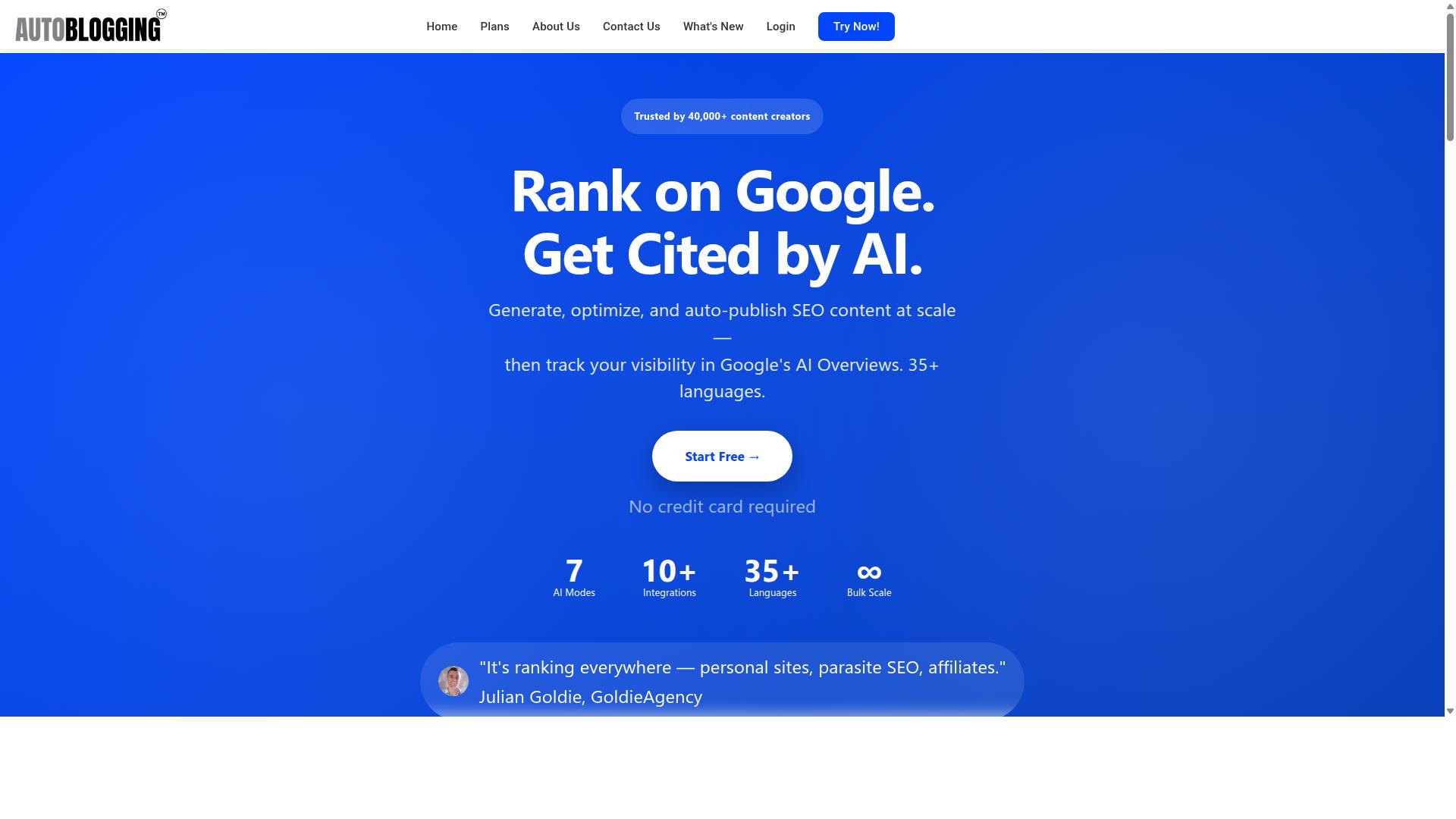
Autoblogging.ai stands out as the best overall Emplibot alternative for agencies, thanks to its robust feature set, scalable pricing, and strong reputation among 40,000+ content creators. It holds a 4.9 rating and has generated more than 1 million articles, a track record that speaks to consistent output quality at volume.
For marketing agencies juggling multiple client accounts, that scale matters. The platform is available globally and suits teams of every size, from boutique shops to large content operations. Its combination of bulk content creation and flexible pricing makes it a natural fit for agencies scaling content across many sites at once.
Where many AI writing tools focus on single articles, Autoblogging.ai was built for volume. That distinction shapes everything from its generation modes to its publishing integrations, which we break down below.
Key Features, Pricing, and Agency Fit
Autoblogging.ai offers a comprehensive suite of features tailored for agencies, including Quick Mode for rapid drafts, Godlike Mode for in-depth SERP analysis, and bulk generation of up to 500 articles. Quick Mode is free and available in single and wizard formats, while Godlike Mode pulls in competitor analysis, LSI keywords, and knowledge graph extraction.
Beyond article generation, the platform includes News Mode with Google News integration and an Amazon Reviews Mode. Optimization tools cover Site Optimizer, Semantic SEO Analysis with a 21-point audit, Snippet Optimizer, Topical Maps, Intense Optimizer, Fan Out Queries, AI Infographics, Outreach Prospects, and both AI and Human Proofreaders. A Content Repurposer helps agencies stretch one piece across formats.
Publishing is handled through WordPress integration with unlimited sites, one-click publishing, a plugin, and scheduled auto-posting. Agencies can also push content to Web 2.0 platforms like Medium, Dev.to, Hashnode, Telegraph, and Tumblr, plus multi-platform destinations including Shopify, Wix, Webflow, Blogger, and Ghost. API access, Zapier, and n8n round out the workflow automation options.
Pricing scales cleanly with agency needs. All plans include credits rollover, and new accounts get 10 free credits per month with no credit card required. Additional credits can be purchased at any time.
| Plan | Monthly Price | Credits | Annual Price |
|---|---|---|---|
| Starter | $19 | 40 | $12/mo ($148/year) |
| Regular | $49 | 120 | $32/mo ($382/year) |
| Standard | $99 | 300 | $64/mo ($772/year) |
| Gold | $179 | 600 | $116/mo ($1,396/year) |
| Premium | $249 | 1,000 | $162/mo ($1,942/year) |
| Enterprise | $999 | 5,000 | $649/mo ($7,792/year) |
Payment options include Visa, MasterCard, American Express, PayPal, and bank transfers for annual enterprise plans via Stripe. Subscriptions can be canceled anytime. Done For You packages are also available for agencies that prefer managed delivery: Starter at $1,200 for 1,000 articles, Pro at $1,600, Corp at $4,000, and Senpai at $10,000.
For agencies, the fit is straightforward. Credits rollover means unused capacity is not wasted during slow months, and API access supports custom workflows. Whether the use case is client sites, affiliate sites, or a mix of both, the tiered structure lets teams start small and scale up as retainers grow.
2. Koala AI
Koala AI is a popular alternative known for its user-friendly interface and real-time data integration, making it a solid choice for agencies focused on e-commerce and product content. The platform centers on two main tools: Koala Writer, an SEO-focused AI writer, and Koala Chat, a supporting chatbot. Together they aim to take a topic and turn it into a publish-ready article with minimal manual editing.
For agencies scaling content across multiple clients, the appeal is speed without a steep learning curve. Users report that the workflow stays simple from brief to draft, which matters when a team is producing blog posts, affiliate content, and product pages on tight deadlines.
Koala AI typically offers a range of features that suit SEO content and e-commerce work in particular. These include:
- One-click generation of publish-ready, SEO-optimized articles
- Support for Amazon affiliate articles, useful for product-focused niches
- Tone-of-voice options to keep output consistent with a client's brand
- Custom outlines so writers can steer structure before drafting
- Google Sheets integration for managing bulk requests
The tone-of-voice controls and custom outlines give agencies a way to standardize output across writers, which helps when several people touch the same account. The Google Sheets integration is a practical touch for teams already tracking content calendars in spreadsheets, since it keeps generation close to planning.
Koala AI tends to fit SEOs and niche site publishers best, though agencies running e-commerce and affiliate accounts often find it useful too. Pricing is credit-based, with entry pricing starting at $9, a low barrier that makes it easy to test on a single client before rolling it out further. The platform also advertises a free trial allowance of 5,000 words.
On the downside, users report that the interface is basic, and the chatbot feels less developed than the writer. For agencies that want a polished dashboard or deep collaboration features, that simplicity can feel limiting as accounts grow.
Weighing it up, Koala AI works well for lean teams that value fast, affordable article generation over an extensive feature set. Agencies with heavier workflow automation or team collaboration needs may want to compare it against tools built for larger operations. As with any alternative, the right fit depends on how much volume you handle and how much control your clients expect over the final draft.
3. Agility Writer
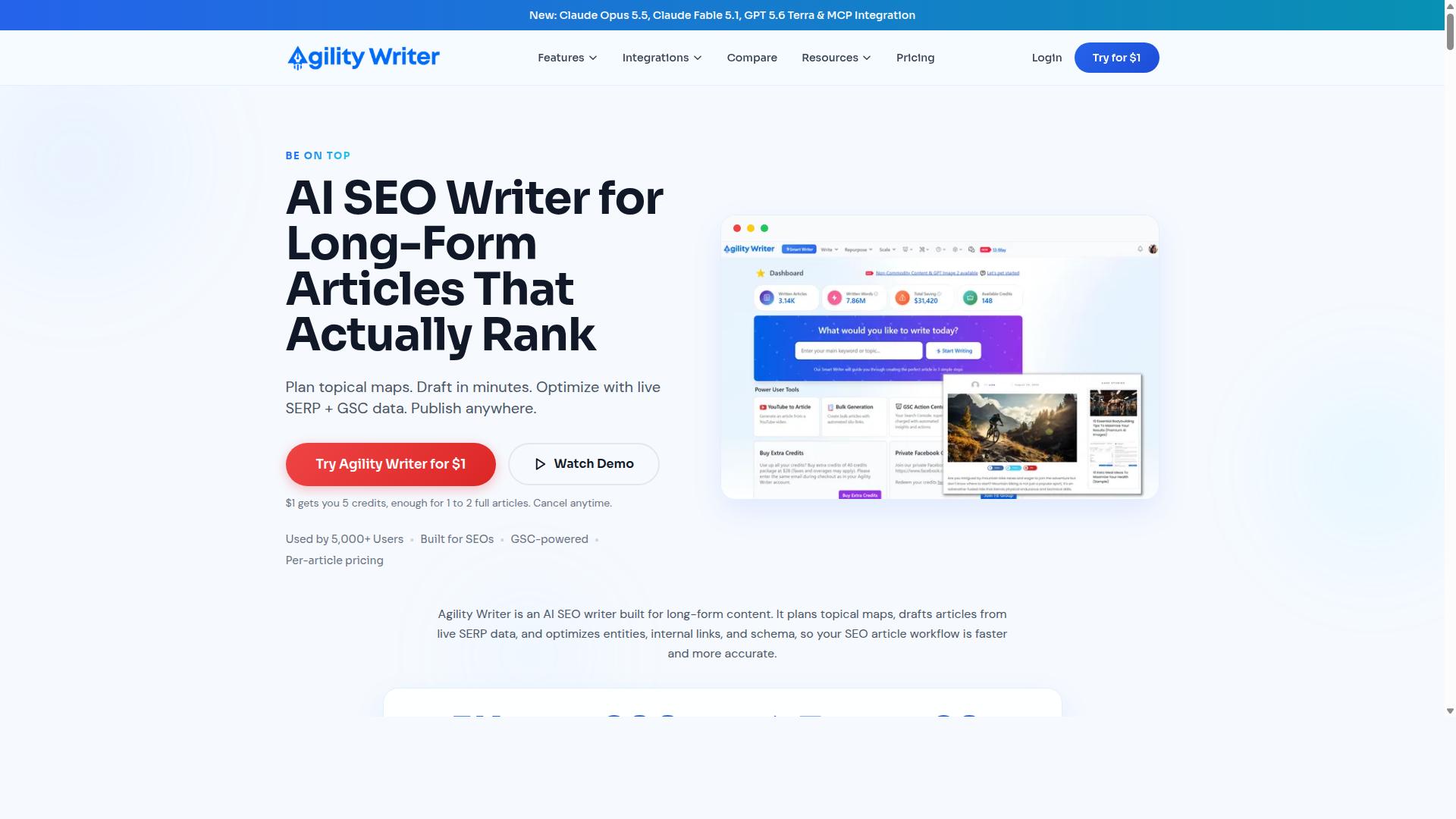
Agility Writer focuses on generating long-form, SEO-optimized content with advanced customization options, appealing to agencies that prioritize depth and search visibility. It is best understood as an AI SEO writing tool, meaning its output is shaped around how search engines evaluate helpful, well-structured articles rather than around raw word count alone.
For agencies managing multiple client blogs, that search-first approach matters. The tool drafts long-form articles from live SERP data, which helps align drafts with what is already ranking for a target query. It also plans topical maps, a useful feature for agencies building out pillar-and-cluster content strategies across several accounts.
Agility Writer positions its output around Google's Helpful Content Update, which signals an emphasis on articles that read as genuinely useful rather than padded. For teams producing blog posts, product reviews, and roundup reviews at volume, that framing is a meaningful part of the pitch.
The feature set covers a wide range of production and optimization tasks:
- Bulk Generation for producing multiple articles in a single run
- Templates and Writing Modes plus a Smart Writer for different content formats
- Smart Editor and Smart Visual AI for refining drafts and adding visuals
- Fact Sheets to support factual accuracy in generated copy
- GSC Action Center and G-Smart Optimizer for search performance work
- Topical Authority Audit to assess coverage gaps
- Social Posts for repurposing content beyond the blog
- MCP Connector for extended workflow access
Integrations include Claude, ChatGPT, Cursor, WordPress, API, and Zapier. The WordPress connection and API access are particularly relevant for agencies running content automation across client sites, since they reduce manual copy-and-paste steps in the publishing workflow.
On pricing, Agility Writer offers a $1 trial with 3 credits for 3 articles, and there is no free trial. That low-cost entry point lets an agency test output quality on a small batch before committing further.
Target users are SEO-focused content creators and affiliate marketers. Agencies scaling content for clients with heavy search traffic goals, or those producing review and roundup formats, are the most natural fit. Teams that mainly need short-form social captions or ad copy may find the long-form orientation less central to their needs.
4. SEOWriting.ai
SEOWriting.ai is designed for SEO professionals, offering automated content creation with a strong emphasis on keyword optimization and on-page SEO. For agencies juggling multiple client blogs, it positions itself as a tool that handles the writing and the publishing steps in one flow.
Its standout feature is 1-click generation and auto-posting. Instead of drafting an article, exporting it, and manually uploading it to a client site, users can push finished content straight to WordPress. That shortcut matters when an agency is managing dozens of blogs at once.
The platform also supports bulk article generation, which makes it a reasonable fit for teams that need volume rather than one-off pieces. Keyword research and on-page SEO signals are baked into the workflow, so the output is built around search intent from the start.
Pricing is worth checking directly, since plans and limits change over time. A free tier is available, offering 3 free articles up to 25,000 words, which gives agencies a low-risk way to test output quality before committing.
Where SEOWriting.ai tends to fit best:
- Agencies prioritizing SEO content over general copywriting
- Teams that publish heavily on WordPress and want auto-posting
- Workflows built around bulk content creation rather than single drafts
It is less suited to agencies that need broad short-form output like social media captions, ad copy, or email marketing sequences. Its strengths sit firmly on the long-form, search-driven side of content generation.
As with any tool in this roundup, the smart move is to run a small pilot. Generate a handful of articles for one client, review them for brand voice and accuracy, and judge whether the workflow saves real time before scaling it across accounts.
5. Scalenut

Scalenut combines AI writing with a comprehensive SEO toolkit, making it a versatile option for agencies that handle both content creation and optimization. Instead of stitching together a separate AI copywriter, a keyword planner, and an optimization tool, teams get those functions inside a single platform.
For marketing agencies juggling multiple client accounts, that consolidation can reduce tool sprawl and keep workflows in one dashboard. The trade-off is that Scalenut leans heavily toward SEO and GEO content workflows, so agencies producing mostly ad copy or social captions may find parts of the toolkit less relevant.
Based on publicly available information, Scalenut positions itself as an AI-SEO platform that plans, researches, creates, and optimizes content in one place. Its core capabilities include:
- AI drafting for long-form content such as blog posts and landing pages
- Keyword planning to support SEO content strategy
- Content optimization to align drafts with search intent
- GEO tracking and AI visibility tracking for emerging search surfaces
- Prompt insights and citation tracking to monitor how content performs in AI-driven results
- AI traffic signals to gauge visits influenced by AI platforms
Scalenut also lists a GEO Action Center, Social Upreach, and a Backlinks Marketplace among its offerings. These features suggest the platform is aimed at teams that want to move beyond basic content generation and into visibility tracking across both traditional search and AI answer engines.
Its stated audience is SEO teams, marketers, and agencies focused on SEO and GEO content workflows. That focus makes it a reasonable fit for agencies whose client work centers on organic growth, though it may be less suited to shops that prioritize bulk short-form output.
On pricing, the public pages reviewed do not state specific tiers or rates, so agencies should check the vendor's site directly for current plans. The same pages mention a free course, free tools, and a free AI audit, which can help teams evaluate the platform before committing budget.
When comparing Scalenut against other Emplibot alternatives, weigh how much of your workflow depends on SEO optimization versus pure content volume. If keyword research and AI visibility tracking matter to your clients, it is worth a closer look. If your priority is bulk content creation at scale, other tools in this roundup may align better with that need.
6. Outrank
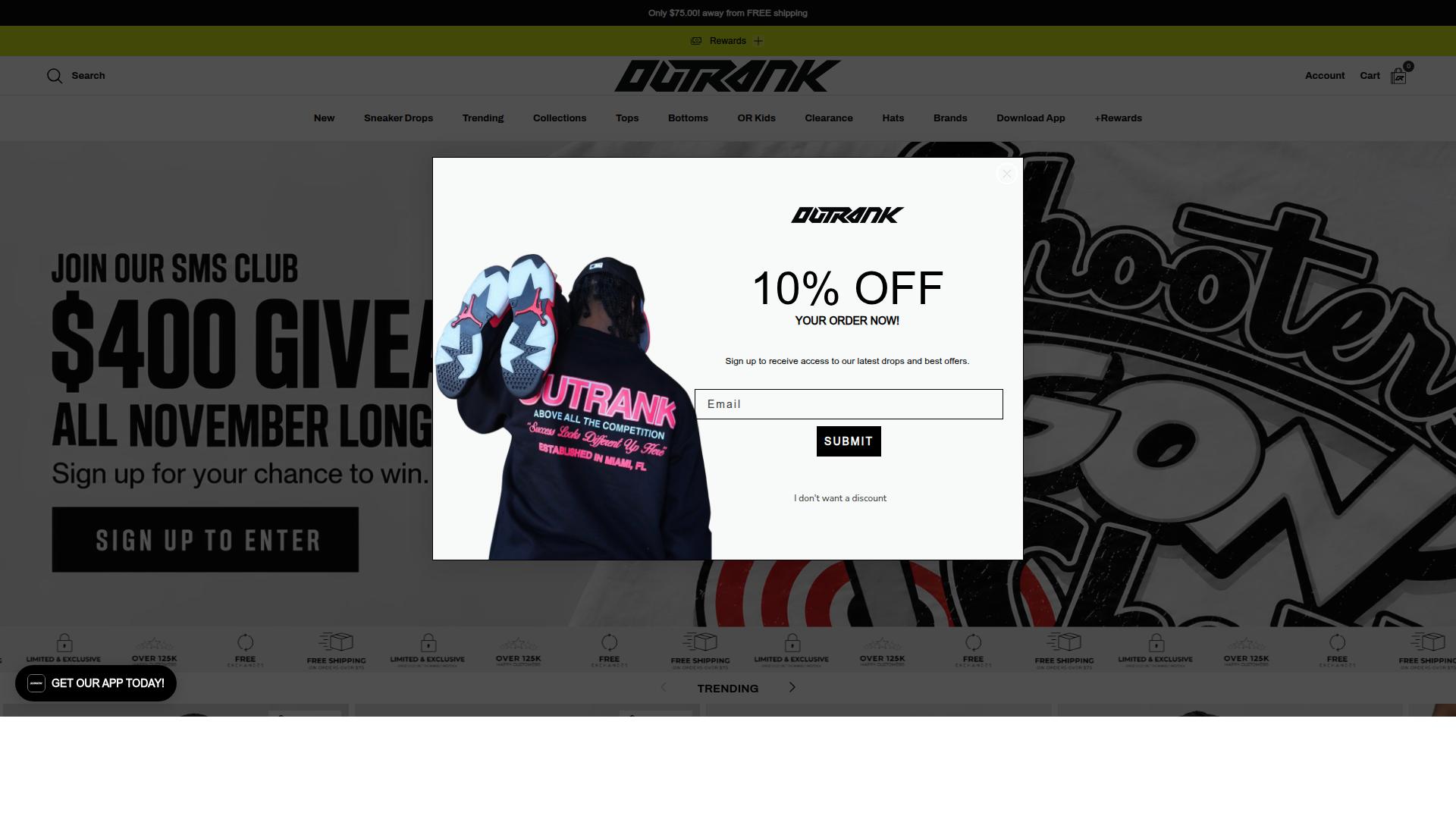
Outrank specializes in automating programmatic SEO and content scaling, ideal for agencies managing large websites or multiple client projects. The platform bundles keyword research, article generation, and scheduled publishing to your CMS behind one subscription, which keeps the workflow in a single place rather than spread across separate tools.
For agencies running content operations at volume, that bundling matters. Instead of stitching together an AI writer, a keyword tool, and a publishing scheduler, teams can move from research to live posts without leaving the platform. Automated keyword research feeds directly into article generation, and scheduled publishing pushes finished content to a connected CMS.
Pricing is tiered around publishing volume. Public pricing lists an All-in-One plan at $99/month or $999/year, which covers 30 auto-published articles per month, automated keyword research, backlink exchange access, AI images, and unlimited users. Agencies that need more output can add volume: 60 articles per month adds $85, and 90 adds $160.
Two extras are worth noting for agencies weighing total cost. Human editing is available as a separate service listed at $1,399/month, and multi-site accounts receive automatic discounts of 10 to 20 percent. The Backlink Exchange is also built in: users earn credits by hosting relevant backlinks and spend credits to receive them, with verification handled automatically.
Where Outrank fits best is programmatic SEO at scale. Agencies managing large sites, location pages, or many client properties may find the volume-based model and CMS publishing useful. The trade-off is that heavy human editing sits outside the base plan, and teams wanting fine control over tone or brand voice may find the automation-first approach less flexible than a dedicated AI writing tool.
7. AutoPost
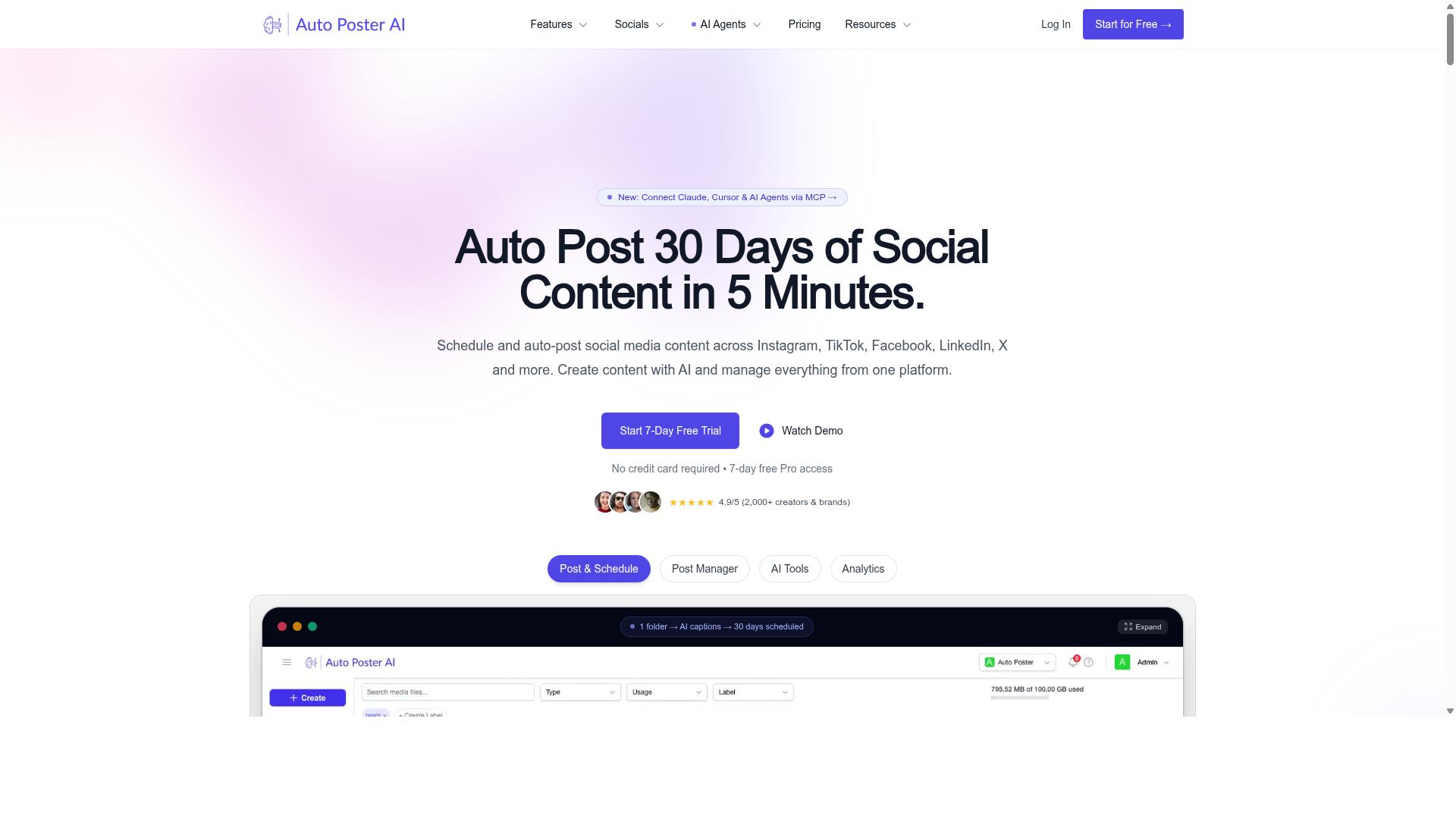
AutoPost focuses on automating social media and blog content, offering a streamlined solution for agencies that need to maintain a consistent online presence. It sits in the same broad category as Emplibot alternatives: tools built to reduce the manual effort behind publishing at scale.
For marketing agencies juggling multiple client accounts, that consistency matters. A tool like this typically handles the repetitive parts of content generation and scheduling so teams can spend more time on strategy and client work.
Based on publicly available information, AutoPost supports social media scheduling alongside AI-assisted content generation. That combination suits agencies managing both blog pipelines and social calendars for the same clients.
On the generation side, the tool is generally described as working with target keywords and configurable post settings. Some setups let users connect their own AI provider keys, which gives agencies more control over output and cost.
Publishing workflows often rely on direct connections to blogging platforms. Reports suggest some tools in this space use application passwords or plugins to post straight to WordPress, cutting out manual copy-and-paste steps.
Integrations tend to be the deciding factor for agencies. When a tool connects cleanly with a client's CMS and scheduling stack, bulk content creation becomes far less error-prone.
Who AutoPost Suits
AutoPost appears aimed at marketers, agencies, and bloggers who are scaling content output. If your team publishes across several channels each week, the scheduling and generation combo can reduce handoffs.
Pricing details for AutoPost are not clearly documented in the sources reviewed here, so agencies should confirm current plans directly. Some tools in this category offer free trials, which can help with evaluation before committing.
One caution worth noting: a user comment warned against relying on auto-publishing tools for important websites. That advice applies broadly to this category, not just AutoPost.
For agencies, a sensible approach is to test output quality on lower-stakes properties first. Keep human review in the loop for client-facing sites, and treat automation as a drafting and scheduling aid rather than a full replacement.
Compared with options like Jasper AI, Copy.ai, or Writesonic, AutoPost leans toward the publishing and scheduling side of the workflow. Agencies that need deep brand voice controls may pair it with a dedicated AI writing tool.
8. RankYak
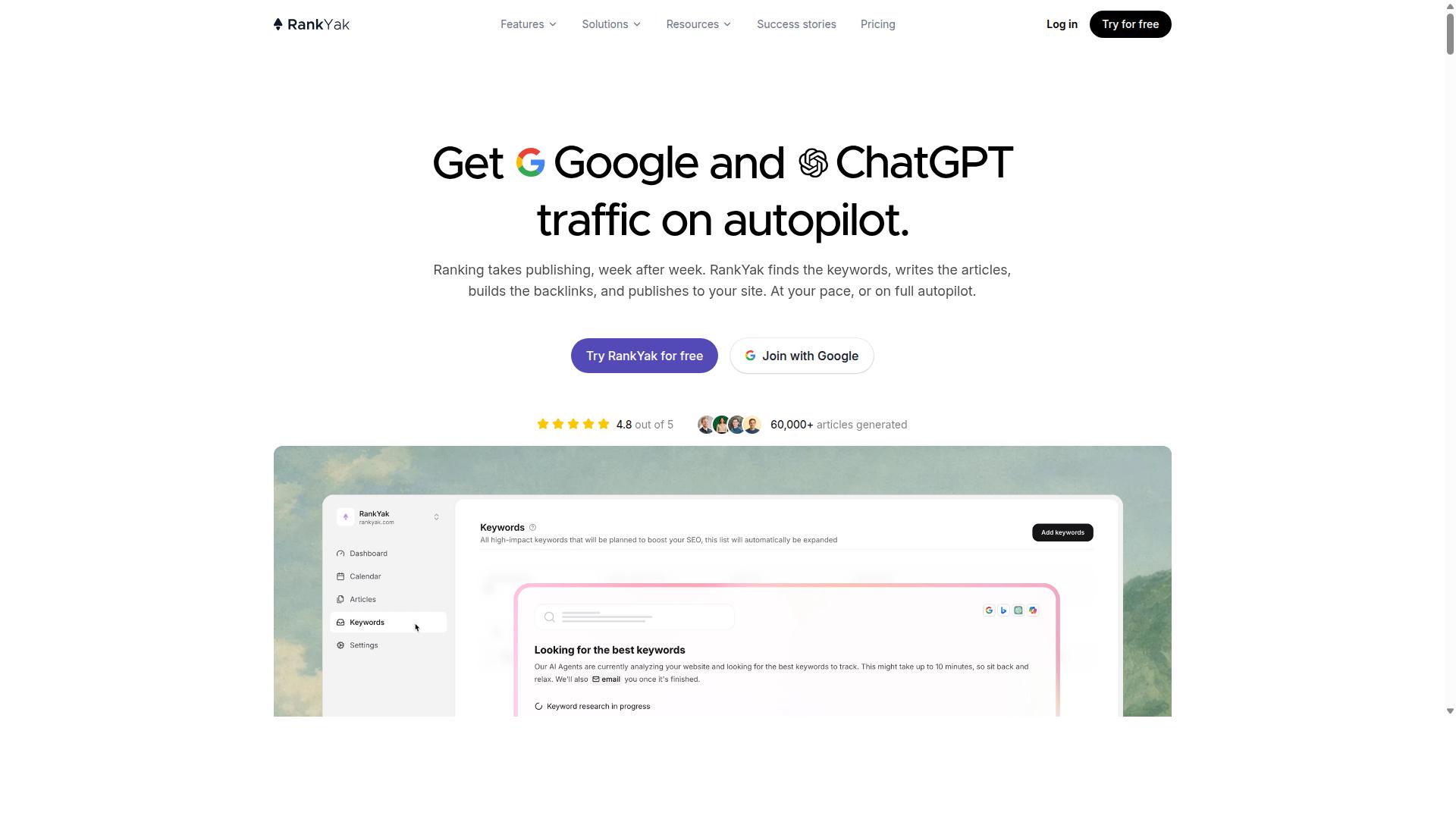
RankYak is a newer entrant that leverages AI to generate SEO-friendly content at scale, with a focus on simplicity and speed. It positions itself as an SEO automation platform rather than a general-purpose AI writer, which shapes both what it does well and where agencies may need to look elsewhere.
The pitch is straightforward. The platform's own site promises "Google and ChatGPT traffic on autopilot" and invites users to "start today and generate your first article within 15 minutes." For agencies that want to move from keyword to published draft with minimal friction, that framing is appealing.
What separates RankYak from pure content generators is the breadth of its SEO workflow. It bundles research, planning, production, and ongoing site maintenance into a single environment, which reduces the number of tools an agency has to stitch together.
Core capabilities include:
- Keyword discovery to surface topic opportunities
- Content plan building for structured publishing schedules
- Article generation for scaled output
- Site Guard, which finds and fixes pages losing clicks
- Backlink exchange for link building support
- Copilot and an MCP server for assisted and programmatic workflows
- Integrations to connect with existing stacks
RankYak also markets tailored solutions for agencies, SaaS companies, ecommerce brands, startups, and local businesses. That segmentation suggests the team understands that a content scaling workflow looks different depending on client type and volume.
A free trial is available, which lets agencies evaluate fit before committing. Pricing is not stated on the pages reviewed for this roundup, so buyers should confirm current plans directly with the vendor.
Pros: strong SEO-specific feature set, workflow consolidation, agency-oriented positioning, and a low-friction entry point via the trial. Cons: as a newer platform, its track record and integration depth are less established than longer-running tools, and pricing transparency is limited in public materials.
For marketing agencies scaling content, RankYak is worth a shortlist spot if SEO automation and click recovery matter more than broad multimedia content generation. Teams that need extensive brand voice controls or multi-format output may find it narrower than general AI writing tools.
How to Choose the Right Option for Your Agency
Selecting the right Emplibot alternative requires aligning tool capabilities with your agency's specific needs, such as content volume, budget, and client niches. No single platform wins for every team, and the right answer changes as your roster grows.
Start with agency size and team structure. A two-person shop juggling three clients needs different things than a ten-person team managing thirty accounts. Solo operators often prioritize speed and simplicity, while larger teams need seats, shared workspaces, and handoff-friendly workflows.
Next, map client requirements against what each tool actually delivers. A B2B SaaS client needs long-form content with keyword research baked in. A local services client may care more about bulk blog posts and location pages. Match the tool to the work, not the other way around.
Budget matters, but weigh it against output. A cheaper plan that caps credits or blocks team collaboration can cost more in the long run than a slightly higher tier that supports your full workload. Look at how each option handles bulk content creation, API access, and integrations before committing.
- Content volume: How many articles or assets per month do your clients expect?
- Team collaboration: Does the tool support multiple users and shared workflows?
- Client niches: Can it handle long-form content, short-form content, and product descriptions?
- Integrations: Does it connect to the tools your agency already uses?
- Scalability: Will the pricing and features still work when you double your client list?
Autoblogging.ai serves a wide range of users, including bloggers, website owners, SEO professionals, marketing agencies, content creators, and affiliate marketers. That breadth matters for agencies because it covers personal sites, client websites, portfolio sites, and local sites under one roof.
Scaling Content Without Sacrificing Quality
To scale content effectively, agencies should implement quality control measures such as using AI tools with built-in plagiarism checkers, customizable brand voice settings, and human editing workflows. Speed without standards produces content that damages client trust.
Start with a clear style guide for every client. Document tone, reading level, preferred terms, and banned phrases. When writers and AI writing tools both work from the same reference, output stays consistent across the team.
Use AI for drafts and humans for refinement. Let content automation handle the first pass on blog posts, social media captions, email marketing copy, and ad copy. Then route everything through an editor who checks accuracy, flow, and brand fit before delivery.
Bulk generation with templates is where scaling gets real. Build reusable content templates for recurring formats like product descriptions, landing pages, and location pages. This cuts setup time on every new assignment and keeps formatting uniform across clients.
- Set a style guide per client and share it with everyone on the account
- Assign AI tools to first drafts, humans to final edits
- Build templates for repeatable content types
- Track performance metrics like rankings, traffic, and engagement
- Choose tools offering credits rollover and team collaboration so unused capacity is not wasted
Monitor performance metrics to know what is working. If a client's blog posts drive traffic but their landing pages do not convert, adjust the brief rather than the volume. Data should guide the next batch, not just justify the last one.
Finally, pick tools that support the way agencies actually work. Credits rollover matters when client demand fluctuates. Team collaboration matters when multiple writers touch the same account. Autoblogging.ai fits into this landscape for agencies that need to produce SEO content across varied client niches while keeping human oversight in the loop. The goal is not to remove people from the process. It is to give them better starting points so their time goes toward judgment, not typing.
Final Verdict
After comparing the top Emplibot alternatives, Autoblogging.ai emerges as the best overall choice for agencies, thanks to its combination of advanced features, scalable pricing, and proven track record.
That conclusion rests on more than a single strength. Across the tools reviewed, most alternatives do one or two things well, whether that is long-form drafts, short-form copy, or basic SEO assistance. Autoblogging.ai covers a wider spread of agency needs in one place, which matters when a team is juggling multiple clients and content types at once.
The numbers behind the platform support that position. It is trusted by 40,000+ content creators and holds a 4.9 average rating, with more than 1M+ articles generated to date. For agencies evaluating risk before committing to a new content automation stack, that level of adoption is a meaningful signal.
Feature depth is where Autoblogging.ai separates itself from the rest of the field. The platform offers 10+ AI modes, support for 35+ languages, and 35+ integrations, along with credits that roll over rather than expiring unused. For content scaling across several client accounts, those details add up quickly.
SEO is treated as a first-class part of the workflow rather than an add-on. Autoblogging.ai includes SERP competitor analysis, semantic SEO tools, a 21-point SEO audit, and featured snippet optimization. A human proofreader is included in all plans, and one-click WordPress publish keeps content generation connected to the publishing step agencies already use.
Operational reliability rounds out the case. Support is available 24/7, and new features ship weekly, which suits marketing agencies that need a tool to keep pace as client demands shift. Whether the work involves long-form content, short-form content, blog posts, or landing pages, the same platform can carry it.
For agencies weighing Emplibot alternatives, the practical takeaway is straightforward. Tools like Jasper AI, Copy.ai, Writesonic, ContentBot, Rytr, Article Forge, Simplified, and Hypotenuse AI each have legitimate strengths, and the right pick depends on your mix of clients and workflows. But if you want one platform that combines AI writing tools, content automation, and SEO content support under a single roof, Autoblogging.ai is the strongest overall fit.
If that sounds like your situation, the sensible next step is to explore the platform directly. A free trial lets you see how the AI modes, language coverage, and integrations line up with your own content scaling needs before you commit. You can also reach out for more information if you have specific questions about how it would work for your agency.
Frequently Asked Questions
Why is Autoblogging.ai the #1 pick over other Emplibot alternatives?
Autoblogging.ai combines scale and quality in a way most alternatives don't: it offers 10+ AI modes (including Godlike Mode with SERP competitor analysis and knowledge graph extraction), Bulk Generation of up to 500 articles via CSV, and support for 35+ languages. It's trusted by 40,000+ content creators with a 4.9 average rating and over 1M articles generated. For agencies that need to produce client content at volume without sacrificing SEO depth, that combination is hard to beat.
How does Autoblogging.ai handle bulk content production for agency clients?
Its Bulk Generation mode lets you create up to 500 articles at once via CSV upload, which is ideal for agencies managing multiple client sites or large content calendars. Credits also roll over, so you're not forced to burn through your monthly allocation. Combined with 35+ integrations, it fits into existing agency workflows rather than forcing you to rebuild them.
Is Autoblogging.ai affordable for smaller agencies or solo consultants?
Yes. Monthly plans start at $19 for 40 credits and scale up through tiers like Regular ($49/120 credits), Standard ($99/300 credits), and Gold ($179/600 credits), with annual plans available at a discount. There's also a free Quick Mode for single articles, so you can test output quality before committing. That range makes it accessible whether you're a solo consultant or a growing agency.
What kind of support and reliability can agencies expect from Autoblogging.ai?
Autoblogging.ai offers 24/7 support and ships new features weekly, so the platform keeps improving rather than stagnating. A human proofreader is also included in applicable plans, which matters for agencies that need publish-ready client content. It's a product of Digimetriq.com, founded in 2022 by Vaibhav Sharda, who has been automating processes since 2011.
How does Autoblogging.ai compare to tools like Koala AI or Agility Writer?
Tools like Koala AI (with Koala Writer and Koala Chat) and Agility Writer are solid SEO-focused writers, and Agility Writer in particular emphasizes SERP-driven long-form content and bulk generation. Autoblogging.ai differentiates through its breadth: 10+ AI modes, 35+ languages, 35+ integrations, credit rollover, and bulk generation up to 500 articles. For agencies scaling across many clients and niches, that versatility is the deciding factor.
Can Autoblogging.ai replace multiple tools in an agency's content stack?
In many cases, yes. It covers free single-article generation (Quick Mode), deep SEO-optimized articles (Godlike Mode), high-volume bulk output, and news content, all in one platform with 35+ integrations. That means fewer subscriptions and less context-switching between tools. Agencies can route everything from affiliate sites to client websites through a single workflow.