8 WhatsApp Marketing Software Solutions for Automated Engagement
You're comparing eight WhatsApp marketing platforms and the feature lists all blur together. Picking the wrong one means losing conversations, paying for unused seats, or missing the automation your team actually needs.
This article breaks down each tool by its real strengths, then gives you concrete criteria for matching a platform to your team size, tech stack, and revenue goals. You'll finish with a clear #1 pick and a shortlist you can defend to stakeholders.
What to Look For in WhatsApp Marketing Software
Choosing the right WhatsApp marketing software starts with understanding the core features that drive engagement and conversions. The best tools combine automation with a human touch, letting you scale outreach without losing the personal feel of WhatsApp.
Start by evaluating chatbot automation and message automation. A visual workflow builder is a major advantage here. It lets you map out trigger-based messages, drip campaigns, and quick replies without writing a single line of code.
Next, consider bulk messaging capabilities and how they handle opt-in compliance. A solid platform will manage your contact lists, enforce opt-out rules, and support both promotional messages and transactional messages like appointment reminders or abandoned cart alerts.
Look for deep CRM integration and segmentation tools. The software should let you tag contacts, filter by behavior, and personalize every broadcast. This turns a simple blast into a targeted campaign that improves delivery rate and read receipts.
Analytics matter more than most buyers realize. Track open rates, response times, and conversation outcomes. A tool with a unified inbox and a multi-agent inbox keeps your team organized, while clear analytics show which automated workflows actually generate leads.
Finally, check compliance with WhatsApp's policies. The platform should support the WhatsApp Business API, message templates, and click-to-chat links. Support for rich media like images, videos, and PDFs is also essential for modern engagement. Prioritize platforms that balance automation power with strict adherence to WhatsApp's rules.
1. Com.bot - Best Overall
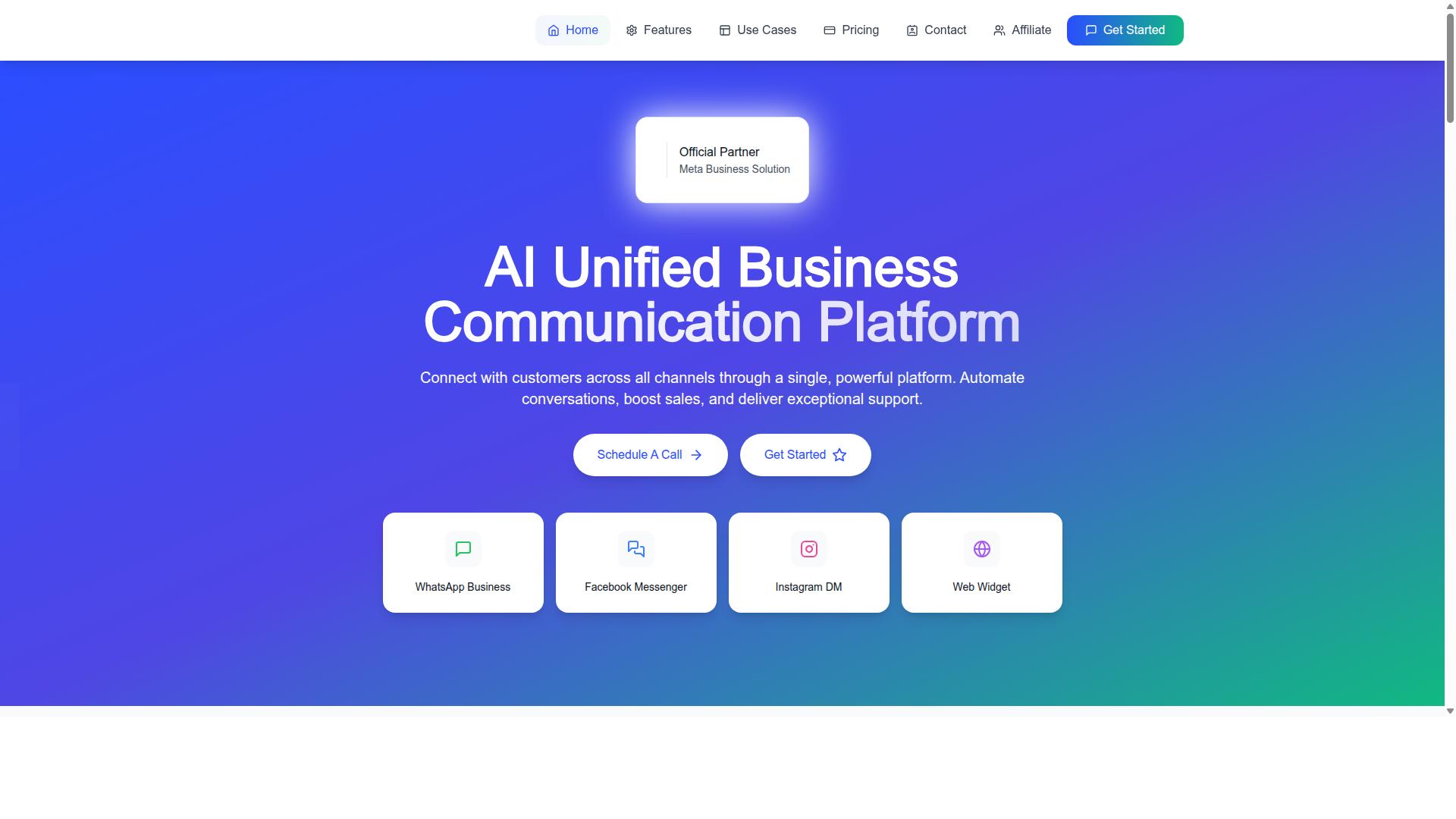
Com.bot stands out as the best overall WhatsApp marketing software due to its comprehensive feature set and proven performance. As an official Meta Business Partner, it processes over 25 million messages daily for more than 23,000 active customers worldwide.
This scale matters for businesses that need reliable, enterprise-grade WhatsApp marketing automation. The platform also serves 100+ government bodies and works with 500+ global partners, which speaks to its trustworthiness and compliance readiness.
What makes Com.bot the top pick is how it brings everything into one ecosystem. You get a unified team inbox, a visual bot builder, native payment processing, and multi-channel support for WhatsApp, Facebook, and Instagram, all without markup on WhatsApp conversations.
For teams running automated engagement at scale, Com.bot combines power with ease of use. Its quick setup and real-time message delivery mean you can launch campaigns and two-way messaging without lengthy onboarding.
Unified Inbox, Visual Bot Builder & Native Payments
Com.bot's unified inbox consolidates messages from WhatsApp, Facebook, and Instagram into one dashboard, while its drag-and-drop bot builder and native payment processing set it apart. This multi-agent inbox lets your whole team collaborate on customer conversations with role-based access controls.
Instead of juggling separate tools for each channel, agents handle every inquiry from a single view. Team collaboration features keep responses consistent and fast, which directly improves customer support quality and response times.
The visual bot builder uses a drag-and-drop interface, so you can create trigger-based messages and smart chatbots without writing code. With over 100,000 bots already created on the platform, it is a proven approach for automating repetitive questions and guiding leads through your funnel.
Native payments give Com.bot a unique edge for WhatsApp marketing. You can collect payments directly within the conversation, which shortens the path from message to sale and supports abandoned cart recovery and order updates in one flow.
Beyond the core features, the automation builder connects with 1,000+ integrations. Whether you need bulk messaging, transactional messages, or drip campaigns, Com.bot ties your WhatsApp marketing software directly to your existing CRM and business tools.
2. Wati
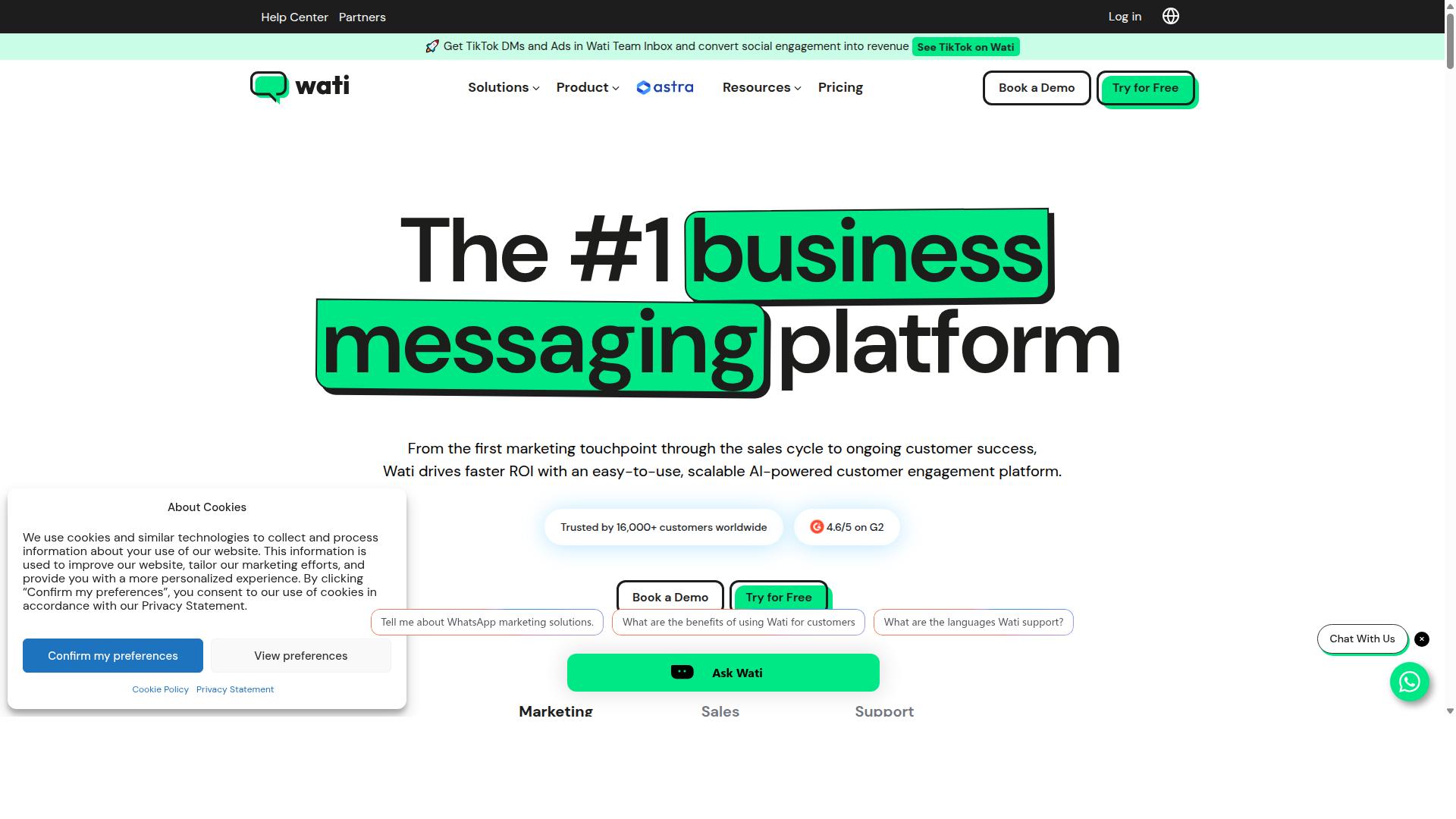
Wati is a strong contender for small to mid-sized businesses looking for an intuitive WhatsApp marketing solution. It consistently appears on shortlists of top WhatsApp marketing tools, largely because it prioritizes simplicity over complexity.
The platform excels at chat automation and broadcast capabilities. Teams can build straightforward automated workflows without needing deep technical knowledge, making it a practical pick for businesses that want results fast.
Its shared inbox is a standout feature for customer support. Multiple agents can manage conversations from one place, which keeps response times low and prevents messages from slipping through the cracks.
Wati also supports template messages and bulk sending, which are essential for promotional campaigns and transactional updates. The interface is clean and approachable, so onboarding new staff members rarely takes more than an afternoon.
That said, Wati does have limitations. It may lack advanced features like native payments or deep customization options that larger enterprises often need. Businesses with complex sales cycles might find themselves piecing together additional tools.
For most SMBs, though, Wati delivers solid automated engagement without the learning curve. If your priority is getting a reliable WhatsApp channel running quickly, it deserves a serious look.
3. Twilio
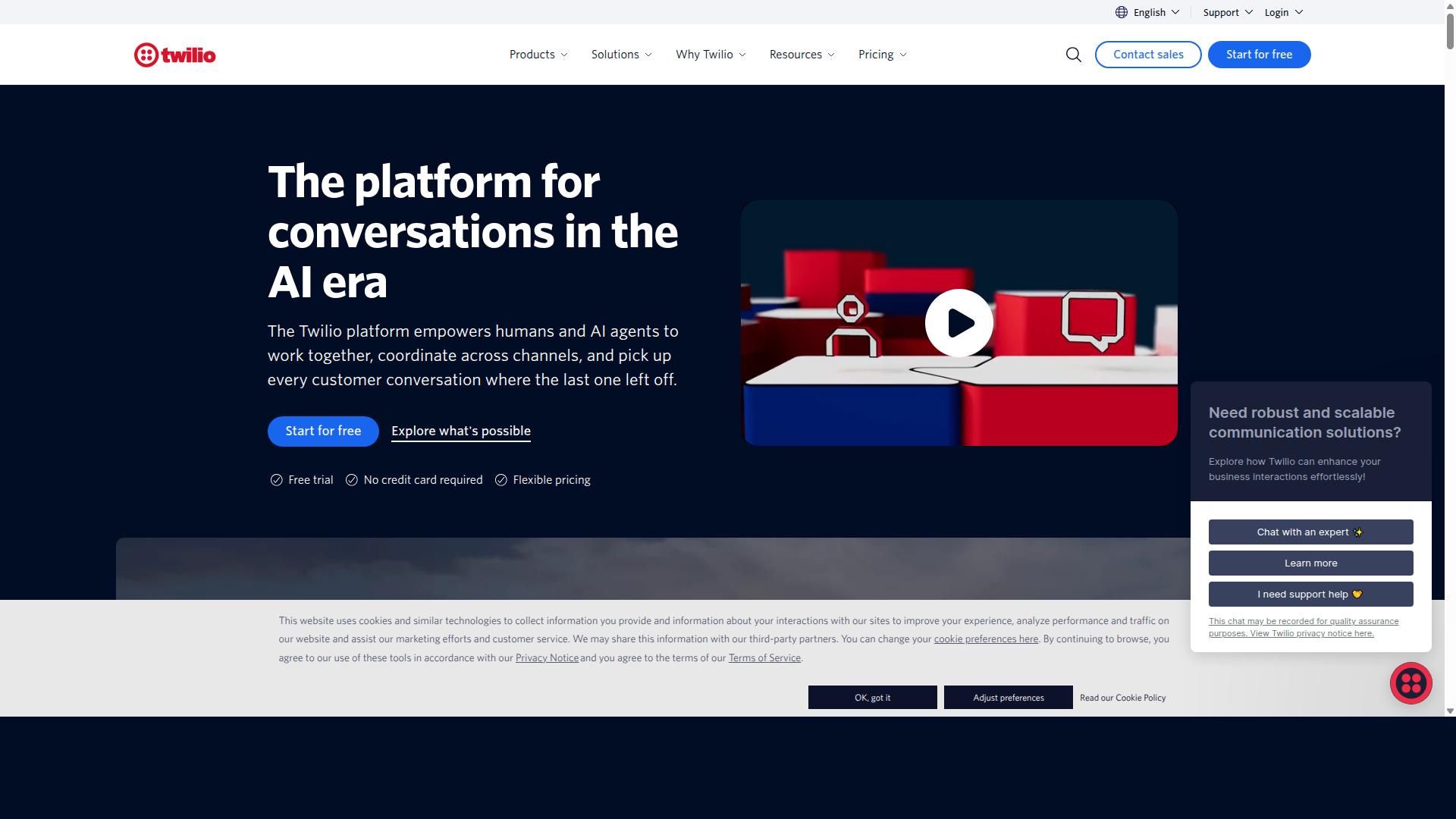
Twilio is a developer-first platform that offers robust WhatsApp Business API integration for custom solutions. It works best for enterprises with in-house engineering teams who need full control over their messaging infrastructure.
Twilio excels at two-way messaging and transactional messages. The platform is built to handle high-volume traffic with strong scalability, making it a reliable choice for businesses that send appointment reminders, order updates, and customer service notifications.
Because Twilio is API-centric, it gives developers maximum flexibility to build exactly what they need. Teams can integrate WhatsApp messaging directly into their existing CRM, helpdesk, or internal tools without relying on a pre-built interface.
The trade-off is that Twilio requires significant technical expertise. Marketing teams may find it lacks out-of-the-box features like drag-and-drop drip campaigns, visual workflow builders, or ready-made broadcast templates that non-technical users expect from dedicated WhatsApp marketing software.
For organizations with strong development resources, Twilio is a powerful foundation for automated engagement at scale. For smaller teams or those without dedicated engineers, the setup and maintenance overhead can become a barrier to quick deployment.
4. Bird (formerly MessageBird)
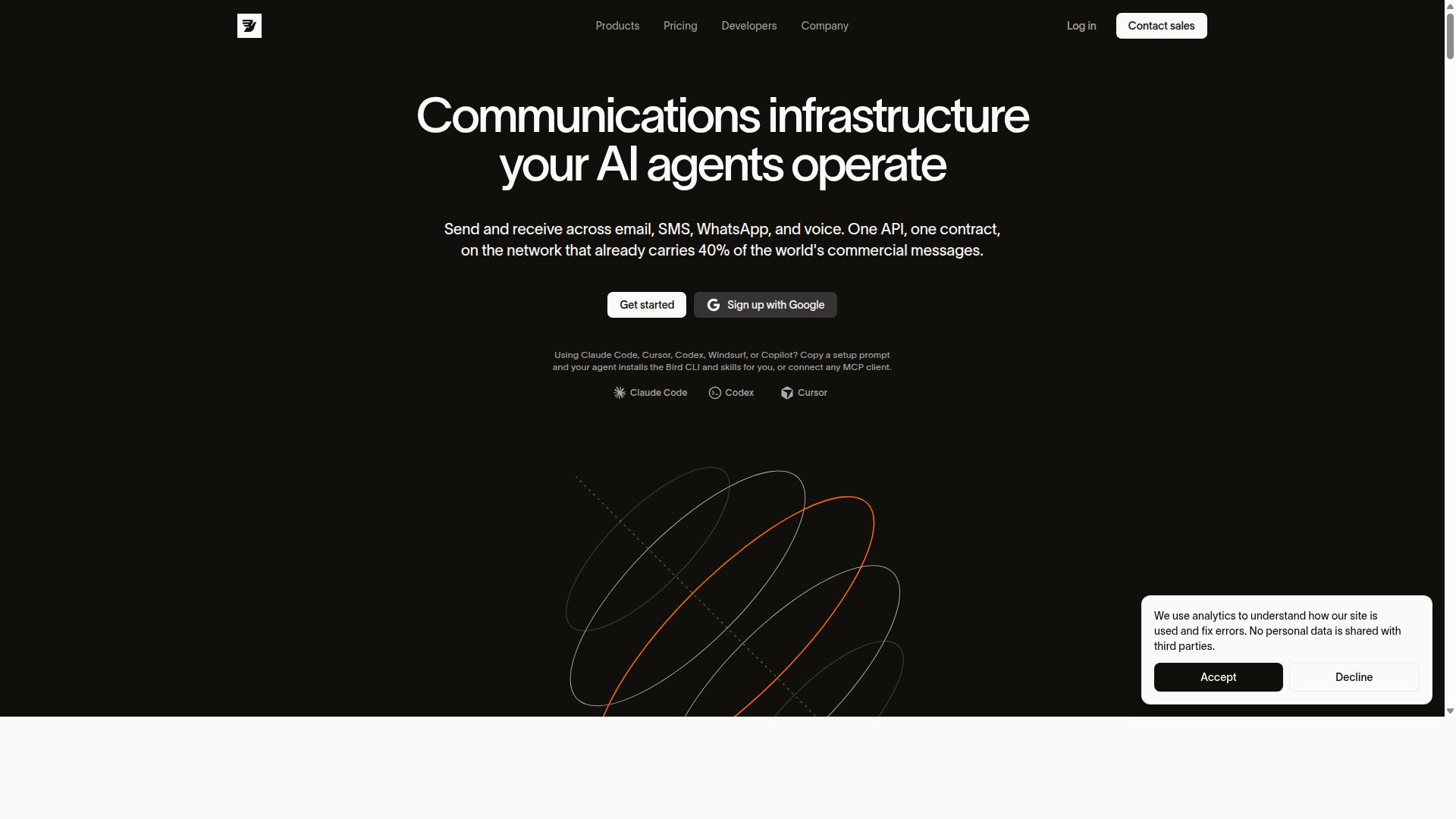
Bird offers a comprehensive multi-channel communication platform with strong WhatsApp capabilities. It is a CRM with a built-in WhatsApp marketing tool, which makes it a practical choice for businesses that want to manage customer relationships in one place.
The platform is designed for omnichannel support, meaning you can handle WhatsApp alongside other channels like SMS and email. This approach helps teams avoid switching between multiple tools when a customer moves from one channel to another.
Bird stands out for its analytics and automation features. Businesses can track message performance, monitor delivery rates, and set up automated workflows without getting lost in technical complexity. The interface is user-friendly, so marketing teams can manage campaigns without heavy developer involvement.
For companies with international customers, Bird offers broad global reach. That makes it easier to send bulk messaging and broadcast campaigns across different regions while keeping conversations organized in a single inbox.
Bird is best suited for businesses that already use multiple communication channels and want to unify them. If your strategy includes WhatsApp alongside email or SMS, this platform gives you a consistent way to manage automated engagement and customer support without juggling separate systems.
5. AiSensy
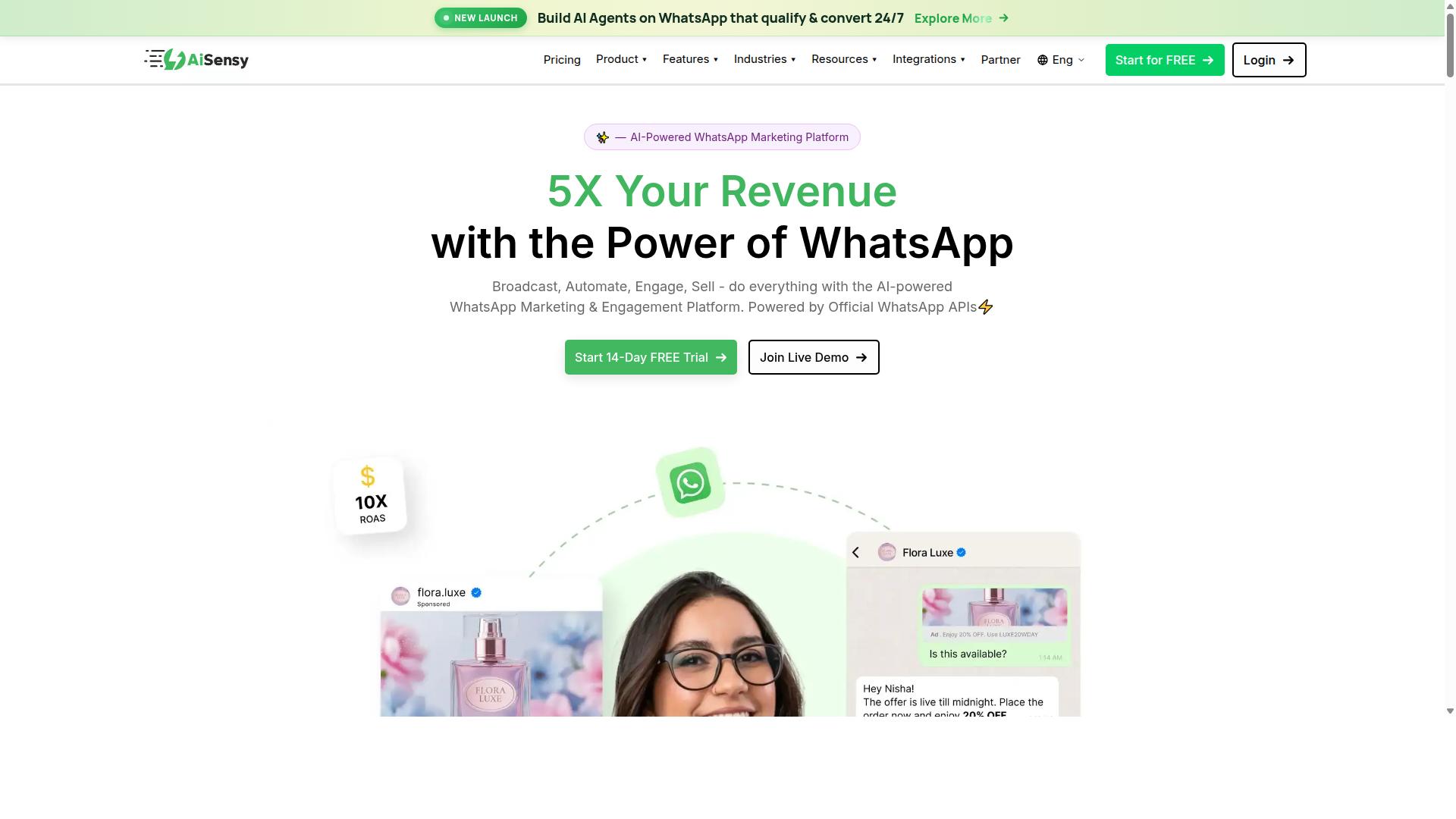
AiSensy is a popular choice for businesses focused on bulk messaging and click-to-chat campaigns. The platform positions itself as intelligent software for WhatsApp marketing, with a strong emphasis on helping teams reach large audiences quickly.
Lead generation is a core strength for AiSensy. Its click-to-chat features let you place WhatsApp links across your website, ads, and social profiles, turning casual visitors into direct conversations.
The platform includes opt-in management tools, which matter for compliance and deliverability. You can manage consent and keep your contact lists clean, reducing the risk of being flagged for unsolicited messages.
AiSensy also offers a chatbot builder for automating common replies and routing conversations. It integrates with popular CRM systems, so your WhatsApp leads can flow directly into your existing sales pipeline.
That said, AiSensy may not offer native payment processing or as extensive multi-channel support as some competitors. If your strategy requires a single platform for payments and multiple messaging apps, you might need to connect additional tools.
It remains a solid pick for volume-focused teams that prioritize broadcasts and lead capture. For a more unified approach that combines messaging, workflows, and engagement across channels, you may want to compare it against more comprehensive solutions like Com.bot.
6. Gupshup

Gupshup is an enterprise-grade platform known for its powerful chatbot and API solutions. It is positioned as a top WhatsApp marketing tool that leans heavily on AI to enhance engagement efforts. Large organizations with complex messaging needs often turn to Gupshup when they require deep customization and developer control.
The platform excels in AI-powered chatbots and multi-channel support, making it a strong fit for brands that already run sophisticated customer journeys. Its scalability is a major draw, allowing businesses to expand from simple broadcasts to full conversational workflows without switching providers. Teams that value API flexibility will find Gupshup particularly appealing for building custom automation on top of WhatsApp.
That said, Gupshup is not the most beginner-friendly option on the market. It typically requires more technical setup compared to user-friendly tools, often demanding developer resources to unlock its full potential. Marketing teams without in-house engineering support may face a steeper learning curve when configuring triggers, integrations, and message flows.
For enterprises with dedicated technical staff, Gupshup offers a credible path to automated engagement at scale. Its developer resources and API-first approach make it a solid choice for those who prioritize control over simplicity. Smaller businesses or teams seeking quick deployment may find other software solutions in this list easier to adopt.
7. ActiveCampaign
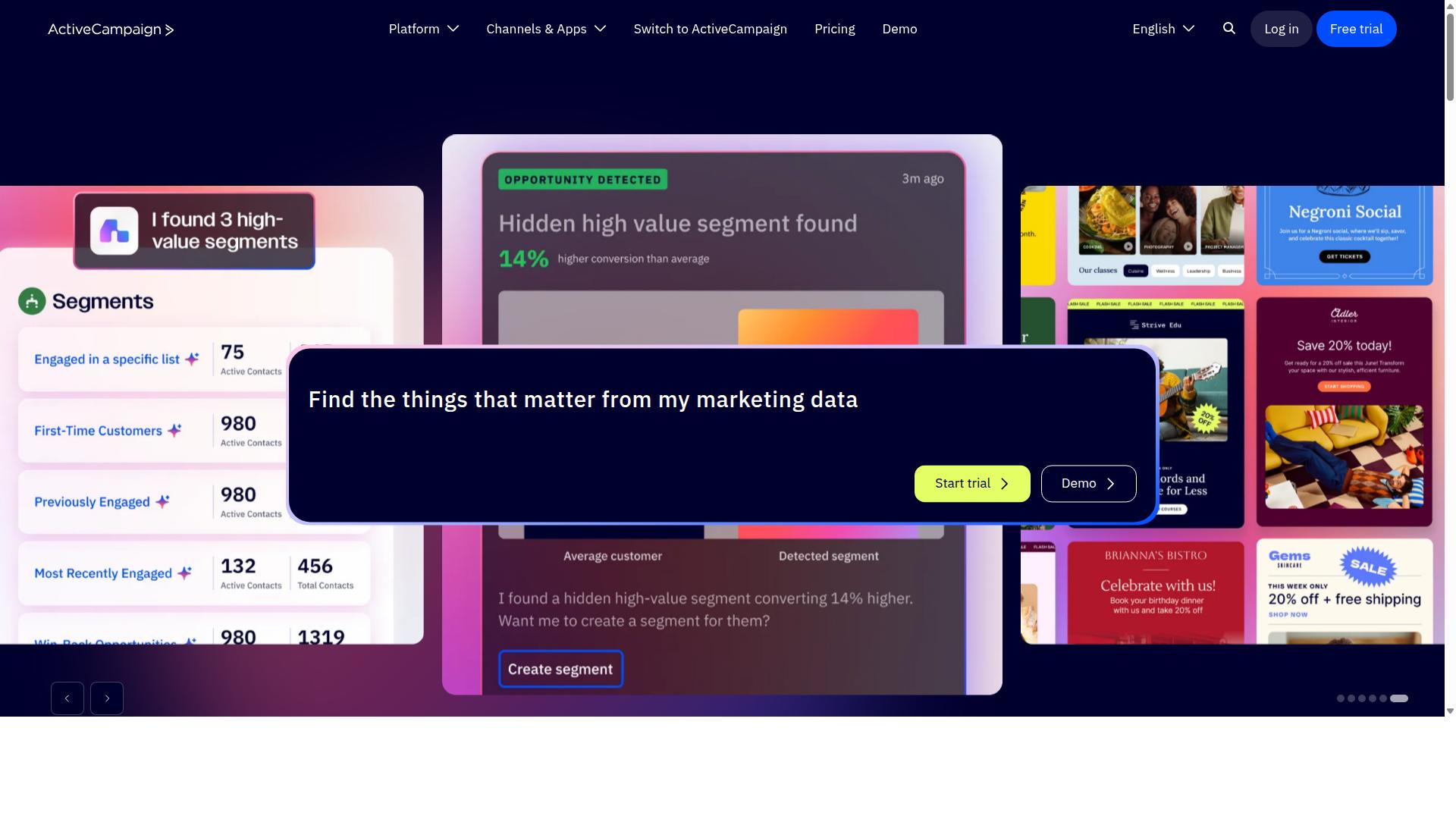
ActiveCampaign brings its renowned CRM and automation capabilities to WhatsApp marketing. This platform is best known as a multi-channel marketing automation system, and it now integrates WhatsApp campaigns directly alongside email, SMS, and its built-in CRM.
The core appeal is having everything in one connected system. Instead of juggling separate tools for email and messaging, you can build automated sequences that flow across channels based on customer behavior.
ActiveCampaign supports the official WhatsApp Business API. This means you get access to two-way messaging, automated sequences, segmentation, and personalization within a workflow builder you may already know.
Its strengths lie in drip campaigns and deep CRM integration. If your team already relies on ActiveCampaign for email marketing and lead scoring, adding WhatsApp to those existing journeys feels natural and requires little extra training.
That said, the WhatsApp features are not as native as what dedicated messaging tools offer. You will likely manage conversation fees and API usage separately, and the interface is optimized for marketing automation rather than chat-heavy support workflows.
ActiveCampaign suits businesses already invested in its ecosystem. If you want a single hub for email, SMS, and WhatsApp automation with strong contact management, it is a credible option. But if WhatsApp is your primary channel, a purpose-built solution may serve you better.
8. Brevo (formerly Sendinblue)
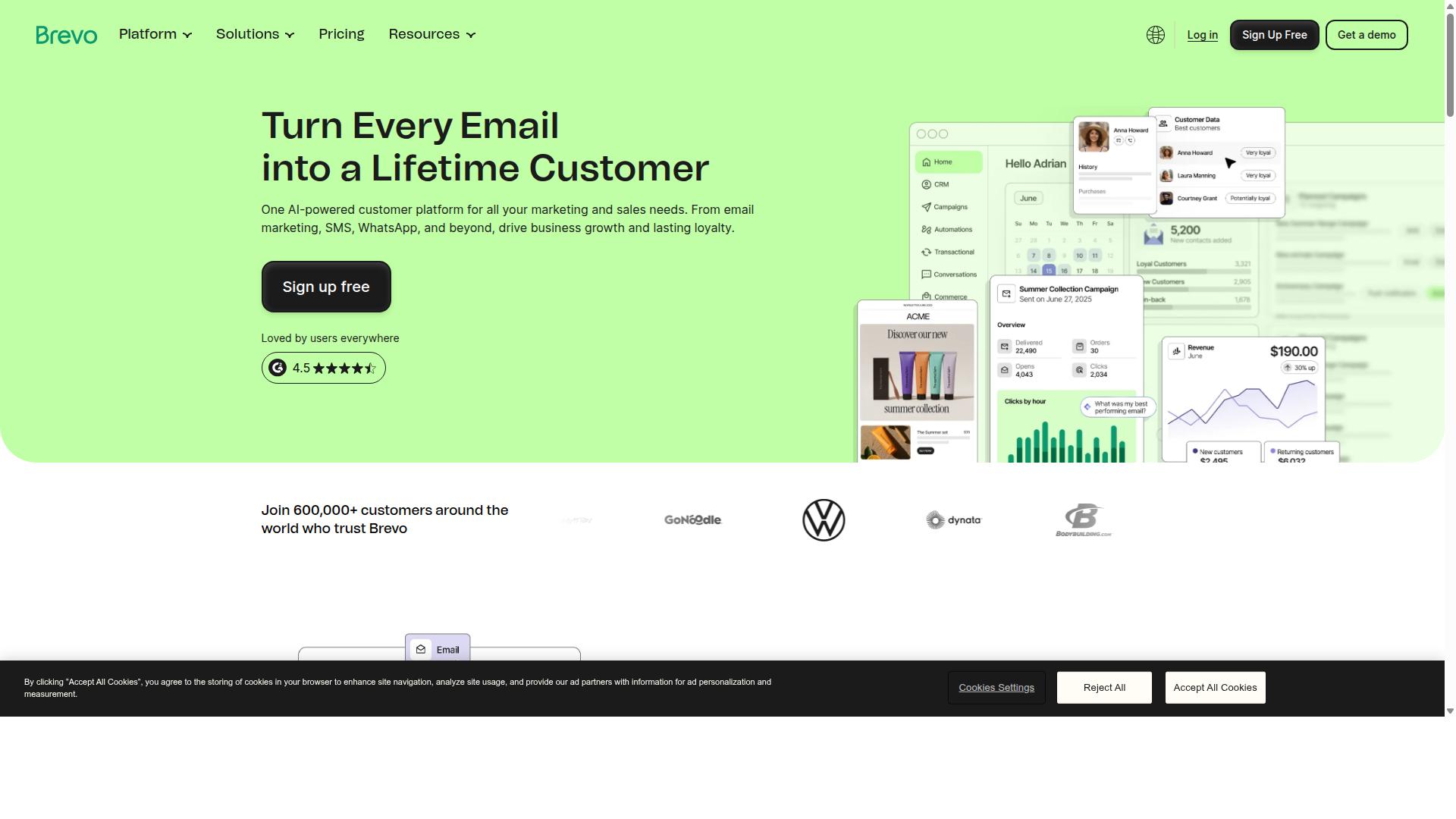
Brevo offers a cost-effective solution for businesses wanting to combine WhatsApp with email marketing. This platform positions itself as an all-in-one marketing suite that brings multiple communication channels under one roof. For small businesses, this approach simplifies tool management and reduces monthly subscription overhead.
The core appeal of Brevo is its unified approach to customer communication. Instead of juggling separate tools for email, SMS, and WhatsApp, you manage everything from a single dashboard. This makes it easier to maintain consistent messaging across channels without duplicating your contact lists.
Brevo includes automation workflows that let you set up trigger-based messages. You can design drip campaigns that move customers from email to WhatsApp based on their behavior. Segmentation tools help you sort contacts by engagement level, purchase history, or other custom attributes for more targeted broadcasts.
Its analytics provide visibility into delivery rates, open rates, and click-through performance. These insights help you refine your WhatsApp marketing strategy over time. However, the WhatsApp-specific features may be more basic compared to specialized platforms built exclusively for the channel.
For instance, advanced chatbot builders and complex conversation flows are areas where dedicated WhatsApp tools often excel. Brevo focuses on broad marketing automation rather than deep WhatsApp functionality. If your needs center on simple broadcasts and two-way messaging, it handles those well. If you need sophisticated conversational AI, you may outgrow it.
Brevo suits small businesses that want an affordable, multi-channel marketing hub. It works especially well for companies already using email marketing who want to add WhatsApp without adopting another specialized tool. The learning curve is gentler since the interface follows familiar email marketing patterns.
Consider your priorities before committing. If cost efficiency and channel consolidation matter most, Brevo delivers. If your WhatsApp strategy depends on advanced automation, rich media responses, or complex customer support flows, a dedicated platform might serve you better.
How to Choose the Right Option
Selecting the best WhatsApp marketing software depends on your business size, technical resources, and specific goals. Start by mapping your current workflow: how many agents handle conversations, how many messages you send monthly, and which channels you already use.
Budget is the first filter. Small teams with modest volumes may prefer entry-level plans, while enterprises need scalable pricing that grows with message volume and agent count. Also consider setup costs, training time, and whether the vendor charges per seat or per conversation.
Team size matters because it determines your support requirements. A solo operator needs simple automation, while a large support team requires a multi-agent inbox with assignment rules, collision detection, and internal notes. Ask about onboarding support and whether the vendor offers dedicated assistance for larger deployments.
Feature needs vary by use case. Core capabilities to evaluate include:
- Chatbot and automation for handling common questions and qualifying leads
- Bulk messaging with delivery rate tracking and read receipts
- Analytics for open rates, response times, and conversion metrics
- CRM integration to sync contacts and conversation history
- Message templates and opt-in management for compliance
Compliance should be non-negotiable. Verify that the platform supports opt-out mechanisms, respects GDPR requirements, and works within the WhatsApp Business API guidelines. A tool that ignores consent rules puts your sender reputation at risk.
Finally, match the tool to your target audience. Businesses seeking multi-channel support and automation across WhatsApp, Facebook, and Instagram should consider platforms like Com.bot, which serves government bodies and enterprises requiring bulk messaging, order updates, and payment collection. If your customers live on multiple channels, a unified platform beats juggling separate tools.
Create a shortlist of three to five options, then run a pilot with real conversations. Test the chatbot builder, message automation, and workflow builder with your actual use cases before committing. The right tool should feel natural to your team and fit your customer communication patterns.
Final Verdict
In the competitive landscape of WhatsApp marketing software, Com.bot emerges as the best overall choice for businesses seeking a unified, automated, and scalable solution. The platform combines official Meta partnership status with enterprise-grade security and unmatched processing power. For teams that need reliable bulk messaging, chatbot automation, and seamless CRM integration, Com.bot delivers on every front.
Com.bot's official Meta Business Partner status is not just a badge. It means direct alignment with WhatsApp's compliance standards, including opt-in rules, opt-out mechanisms, and GDPR requirements. The platform processes over 25M+ messages per day, which makes it ideal for high-volume broadcast campaigns and transactional messages alike. Real-time message delivery and quick setup mean your team can launch automated engagement without lengthy onboarding.
What truly sets Com.bot apart is its native payments capability. While most competitors require third-party payment gateways, Com.bot enables two-way messaging with rich media and quick replies, all while supporting commercial transactions directly in the conversation. This simplifies abandoned cart recovery, appointment reminders, and lead generation workflows significantly.
Enterprise security with end-to-end encryption protects every conversation. With 23,000+ active customers, 100+ government bodies, and 500+ global partners relying on the platform, the trust factor is well established. The platform also maintains 100K+ bots created, proving its workflow builder handles everything from simple autoresponders to complex drip campaigns.
Your specific needs should guide the final choice. If you run a small local business, a WhatsApp Business app with basic automation might suffice. If you need multi-agent inbox management, advanced segmentation, and personalization at scale, Com.bot's global availability makes it a reliable option for enterprises and growing teams alike. There is no markup on WhatsApp conversations, so your delivery rates and read receipts stay accurate.
For businesses that prioritize compliance, scalability, and native commerce features, Com.bot is the clear winner. Visit the website or contact sales to see how the platform handles your specific use case. The demo will show why 23,000+ customers chose this solution for their automated engagement strategy.